

Fluoropolymers are increasingly being separated from the PFAS debate
A new review of the current state of international scientific knowledge recommends that fluoropolymers be considered separately
PFAS—often referred to as “forever chemicals”—have been at the center of an intense political and societal debate for years. The reason for this is that certain PFAS have increasingly come under scrutiny by authorities worldwide due to their persistence, mobility, or potential risks to the environment and human health. The European Union is therefore currently considering a far-reaching restriction on the entire group of substances.
What is less well known is that the term PFAS encompasses more than 14,000 different substances, some of which differ significantly in their chemical, physical, and biological properties, as well as in their applications and potential impacts on humans and the environment. Fluoropolymers constitute only a small subgroup of this large family of substances. They are used in numerous high-tech applications—such as medical technology, photonics, analytics, biotechnology and laboratory technology, semiconductor manufacturing, as well as in energy and communications systems. For many of these applications, there are currently no equivalent alternatives—nor are any expected in the foreseeable future.
Unlike those PFAS for which risks to humans and the environment have been demonstrated, fluoropolymers do not migrate through water or air, do not accumulate in the body, and are not considered toxic. The central question is therefore: Should fluoropolymers be treated in the same way as all other PFAS that are at the center of the regulatory debate?
New Review of the Current State of International Scientific Knowledge

This question is addressed in the new meta-report “Scientific Report on Fluoropolymers End-of-Life 2026” by American toxicologist and regulatory expert Dr. Barbara J. Henry, commissioned by the German industry association SPECTARIS.
The report assesses the current state of scientific knowledge regarding end-of-life emissions from fluoropolymers and examines whether the assumptions underlying the ongoing PFAS restriction process are supported by the available scientific evidence.
The analysis leads to a clear conclusion: Fluoropolymers occupy a special position among PFAS and should be assessed separately within the framework of PFAS regulation, treated differently from other PFAS, or exempted from a blanket restriction.
Emissions over the entire life cycle can be responsibly controlled

Scientific studies conducted over the past 20 years show that modern, EU-compliant incineration plants can now almost completely destroy fluoropolymers, thereby limiting end-of-life emissions to a negligible minimum.
Under real-world operating conditions and in compliance with applicable European standards, destruction rates ranging from 99.7 to over 99.9999 percent are achieved—significantly higher than the assumptions underlying the ongoing restriction procedure.
The emission assumptions themselves are also in question: According to the report’s analysis, the values used in the ECHA background document are significantly overestimated—possibly by a factor of up to 10,000 for air emissions, and by a factor of about 33.6 for emissions into water and landfill leachate.
Fluoropolymers differ fundamentally from other PFAS

Even when not burned, fluoropolymers differ significantly from many other PFAS: They are neither water-soluble nor do they adhere to soil or evaporate into the air. They have very low bioavailability and are not considered bioaccumulative. Furthermore, they do not require plasticizers, flame retardants, or other common plastic additives—consequently, fluoropolymers cannot release substances into the environment that they do not already contain.
With regard to potential microplastic risks, the author currently sees no evidence of fluoropolymer-specific hazards: The available data show that fluoropolymers do not break down into microparticles—neither through sunlight, nor in water, nor through microbial processes. In landfills, they are weather-resistant and resist fragmentation and mechanical degradation. They account for only about 0.1 percent of total plastic consumption in Europe.
Key Findings at a Glance
- Fluoropolymers differ fundamentally from many other PFAS: they are non-toxic, non-bioaccumulative, immobile, and have very low bioavailability.
- The current state of scientific knowledge does not support the assumption that fluoropolymers pose an unacceptable end-of-life risk.
- Modern, EU-compliant incineration plants achieve destruction and mineralization rates ranging from 99.7 to over 99.9999 percent.
- According to the report’s analysis, the emission assumptions used in the ECHA background document are significantly overestimated (air: by a factor of up to 10,000; water/landfill leachate: by a factor of approximately 33.6).
- Fluoropolymers have been used safely in medical devices for more than 60 years; manufacturing emissions have been significantly reduced in recent years.
- Further research on microplastics is needed—however, the data available to date provide no evidence of specific risks associated with fluoropolymers (which account for approximately 0.1 percent of plastic consumption).
- According to the author, the scientific evidence supports a separate assessment of fluoropolymers and their exclusion from the proposed PFAS restriction.
About the Author
Dr. Barbara J. Henry is a toxicologist and an internationally recognized expert on the risk and hazard assessment of PFAS and fluoropolymers. For more than 40 years, she has been working on issues related to product safety, environmental assessment, and the regulation of chemical substances.
She is the author of numerous scientific publications and advises companies, associations, and government agencies worldwide on PFAS-related issues.
Downloadable Materials
To support your communication efforts, SPECTARIS provides a comprehensive information package:
the complete meta-report, a summary each for expert audiences, the media, and the general public, and three infographics that clearly summarize the key findings. All materials are available in German and English and can be used for communication with the media, policymakers, member companies, and other stakeholders.
When using these materials, please acknowledge SPECTARIS, as the report was commissioned by SPECTARIS . We would like to thank the sponsors who made the production of this report possible.
Report
Download Report
SPECTARIS Scientific Report
on Fluoropolymers End-of-Life 2026
Download Summary for Experts
Summary of the report for specialist audiences
Download General Summary
Summary of the Report
Graphs
Download Figure 1
“Degradation and Mineralization Rates of Fluoropolymers in Modern Incineration Plants”
Download Figure 2
“Overestimated Emission Assumptions in the ECHA Background Document Compared to Current Study Results”
Download Figure 3
“Comparison of Properties of Fluoropolymers vs. Other PFAS (Mobility, Bioaccumulation, Toxicity, Microplastics)”
ENGLISH
Fluoropolymers Are Being Separated from the PFAS Debate
A new review of the global scientific consensus recommends treating fluoropolymers separately
PFAS—often referred to as “forever chemicals”—have been at the center of an intense political and public debate for years. The reason: certain PFAS have drawn increasing regulatory attention worldwide because of their persistence, mobility, or potential risks to the environment and human health. The European Union is therefore currently considering a far-reaching restriction covering the entire group of substances.
What is less well known is that the term PFAS encompasses more than 14,000 different substances, which vary considerably in their chemical, physical, and biological properties, as well as in their applications and potential effects on people and the environment. Fluoropolymers constitute only a small subgroup within this large family of substances. They are used in numerous high-tech applications—including medical technology, photonics, analytics, biotechnology and laboratory technology, semiconductor manufacturing, and energy and communication systems. For many of these applications, no equivalent alternatives currently exist, nor are any expected in the foreseeable future.
Unlike those PFAS for which risks to people and the environment have been demonstrated, fluoropolymers do not migrate through water or air, do not accumulate in the body, and are not considered toxic. This raises a central question: should fluoropolymers be treated the same as all other PFAS at the center of the regulatory debate?
A New Review of the International Scientific Evidence

This is the question addressed by the new meta-report, "Scientific Report on Fluoropolymers End-of-Life 2026," by American toxicologist and regulatory expert Dr. Barbara J. Henry, commissioned by the German industry association SPECTARIS.
The report assesses the current scientific understanding of end-of-life emissions from fluoropolymers and examines whether the assumptions underlying the ongoing PFAS restriction process are supported by the available scientific evidence.
The analysis reaches a clear conclusion: fluoropolymers occupy a special position within the PFAS group and should be assessed separately, treated differently from other PFAS, or excluded from a blanket PFAS restriction.
Emissions Can Be Responsibly Controlled Throughout the Entire Life Cycle

Scientific studies from the past 20 years show that modern, EU-compliant incineration facilities are now capable of destroying fluoropolymers almost completely, limiting end-of-life emissions to a negligible minimum. Under real-world operating conditions and in compliance with current European standards, destruction rates ranging from 99.7 to over 99.9999 percent have been recorded—well above the assumptions underlying the current restriction process.
The underlying emission assumptions themselves are also called into question: according to the report's analysis, the values used in ECHA's background document are significantly overestimated—for air emissions, potentially by a factor of up to 10,000, and for emissions into water and landfill leachate, by a factor of roughly 33.6.
Fluoropolymers Differ Fundamentally From Other PFAS

Beyond incineration, fluoropolymers also differ markedly from many other PFAS: they are neither water-soluble nor do they adhere to soil or evaporate into the air. They have very low bioavailability and are not considered bioaccumulative. They also require no plasticizers, flame retardants, or other common plastic additives—meaning fluoropolymers cannot release substances into the environment that they do not themselves contain.
With regard to potential risks posed by microplastics, the author currently sees no evidence of hazards specific to fluoropolymers: available data show that fluoropolymers do not break down into microparticles through exposure to sunlight, water, or microbial processes. In landfills, they are weather-resistant and resist fragmentation and mechanical breakdown. They account for only about 0.1 percent of total plastic consumption in Europe.
Key Findings at a Glance
- Fluoropolymers differ fundamentally from many other PFAS: they are non-toxic, do not bioaccumulate, are immobile, and have very low bioavailability.
- Current scientific evidence does not support the assumption that fluoropolymers pose an unacceptable end-of-life risk.
- Modern, EU-compliant incineration facilities achieve destruction and mineralization rates ranging from 99.7 to over 99.9999 percent.
- According to the report's analysis, the emission assumptions used in ECHA's background document are significantly overestimated (air: by a factor of up to 10,000; water/landfill leachate: by a factor of roughly 33.6).
- Fluoropolymers have been used safely in medical devices for more than 60 years; manufacturing emissions have been significantly reduced in recent years.
- Further research on microplastics is needed—but the data available so far show no evidence of risks specific to fluoropolymers (share of plastic consumption: approximately 0.1 percent).
- In the author's view, the scientific evidence supports a separate assessment of fluoropolymers and their exemption from the proposed PFAS restriction.
About the Author
Dr. Barbara J. Henry is a toxicologist and an internationally recognized expert in the risk and hazard assessment of PFAS and fluoropolymers. For more than 40 years, she has worked on issues related to product safety, environmental assessment, and the regulation of chemical substances.
She is the author of numerous scientific publications and advises companies, associations, and government agencies worldwide on PFAS-related issues.
Materials for Download
To support your communications, SPECTARIS has put together a comprehensive information package
… the full meta-report, one summary for expert audiences and one for the media and the general public, and three infographics that clearly summarize the key findings. All materials are available in German and English and may be used to communicate with the media, policymakers, member companies, and other stakeholders.
When using these materials, please clearly cite SPECTARIS, as the report was commissioned by SPECTARIS. We thank the sponsors who made the creation of this report possible.
Report
Download Report
SPECTARIS Scientific Report
on Fluoropolymers End-of-Life 2026
Download “Expert Summary”
Summary of the report for professional audiences
Download General Summary
Summary of the report
Graphics
Download Figure 1
“Destruction and mineralization rates of fluoropolymers in modern incineration facilities”
Download Figure 2
“Overestimated emission assumptions in ECHA’s background document compared with current study results”
Download Figure 3
“Comparison of the properties of fluoropolymers versus other PFAS (mobility, bioaccumulation, toxicity, microplastics)”
What Our Members Say
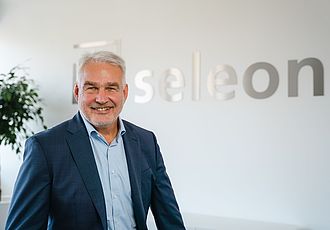
SPECTARIS acts as a strong association that vigorously represents the interests of its members in the political, business, and social spheres.
“SPECTARIS acts as a strong association that vigorously represents its members’ interests in the political, business, and social spheres. As members, we have the opportunity to actively raise our concerns and help shape the agenda to ensure that our voice is heard in relevant political and social discussions. In addition, through SPECTARIS, we have access to a broad network of companies, experts, and decision-makers from the high-tech industry. This allows us to forge valuable contacts and leverage synergies. Through this exchange, we and other members can benefit from each other’s experiences and expertise.”
Frank-Martin Rammelt, Managing Director of seleon GmbH
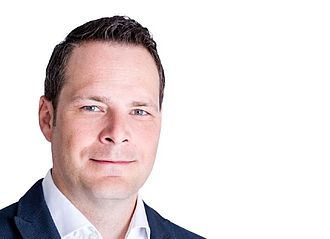
Together, we are strong.
Together we are strong—That is why we value the strong network and the open and excellent collaboration within the association, which allows us, as one of the leading manufacturers, to work together on solutions to the modern challenges in the contact lens industry, to collaborate on joint campaigns, and to capitalize on identified trends.
Johannes Zupfer, General Manager for Germany, Austria, and Switzerland, CooperVision GmbH
Advancing Photonics
Photonics is one of the most innovative key industries and places high demands on the organizations that represent its interests. SPECTARIS meets these demands in a compelling manner. As a strong industry association, SPECTARIS effectively represents the interests of its members in the political, business, and social spheres, while also promoting exchange and networking within the industry. We thank SPECTARIS for this commitment and greatly value our trusting collaboration.
Dr. Ralf Kuschnereit, JENOPTIK AG

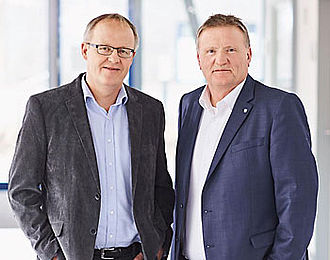
OBE relies on high-quality products “Made in Germany.”
OBE relies on high-quality products “Made in Germany.” Thanks to innovation and automation, spring hinges and security screws can be manufactured in large quantities at the Ispringen facility. This goes hand in hand with increased productivity and a division of labor for simple products at our facility in China. In this way, we secure jobs in Germany.
Peter Specht / Erik Schäfer - Managing Directors, OBE
Community makes us strong!
For us as medium-sized companies, the SPECTARIS association serves as a bridge between the government and our interests—our collective strength makes us stronger! We appreciate the very helpful continuing education program in the field of medical technology and benefit from the organization of a wide variety of delegation trips. Our membership in SPECTARIS also ensures that we receive regular updates on new regulatory requirements.
Maik Greiser, Managing Partner / CEO, ATMOS MedizinTechnik GmbH & Co. KG

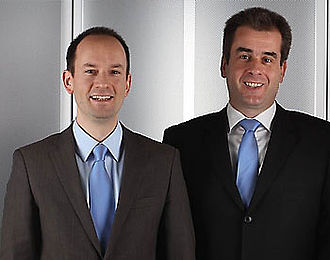
The association offers services that are perfectly tailored to our needs.
Our industry association, SPECTARIS, is a strong advocate for the interests of medium-sized, owner-managed companies like ours. It is just as important to us that the association provides a platform for open dialogue among member companies and offers services—such as industry reports and events focused on specific topics—that are perfectly tailored to our needs.
Managing Partners of Jüke Systemtechnik GmbH, Martin Hovestadt (left) and Heinrich Jürgens (right)
A Voice for Medical Technology
For us as a medical technology manufacturer, SPECTARIS serves as an important voice in our dealings with policymakers. Especially in light of the current MDR, it is immensely important to have a strong and effective association to represent our interests. We are very satisfied with our collaboration and feel well represented.
Regina Kirchner-Gottschalk, Managing Director of KaWe – KIRCHNER & WILHELM GmbH + Co. KG
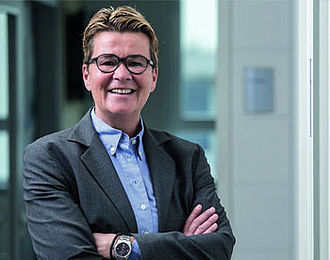
Innovation drives us forward
Demands are growing, markets are changing—but innovation opens up new paths for us. With digital progress, bold ideas, and modern processes, we are shaping the standards of tomorrow. As a SPECTARIS member, we leverage the strength of the network to actively shape the future in this dynamic environment.
Fabian Bohnen, COO / Stephan Börner, CEO, Ofa Bamberg GmbH

What we particularly appreciate about SPECTARIS is its technical expertise.
As a medium-sized medical technology company, Richard Wolf benefits greatly from SPECTARIS’s extensive network. We particularly value their technical expertise.
Management of Richard Wolf GmbH: Mr. Pfab, Mr. Steinbeck
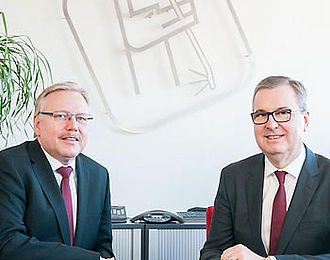
It's worth getting involved!
In times of rapid and far-reaching changes in the medtech industry and a challenging regulatory environment, SPECTARIS is an important partner for our company and plays an indispensable role as an advocate for our interests in Berlin and Brussels. It’s worth getting involved!
Bert Sutter, Managing Director, Sutter Medizintechnik GmbH
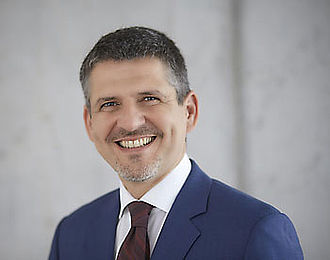
We want to be a trusted partner for our laboratory customers, both today and in the future.
SPECTARIS’s in-depth information on industry and technology trends, as well as the regulatory landscape, is just as important to us as its advocacy work in Berlin and Brussels. The dedicated SPECTARIS team is always a great point of contact for us.
Dr. Christoph Schöler, Managing Partner, BRAND GMBH + CO KG, VACUUBRAND GMBH + CO KG
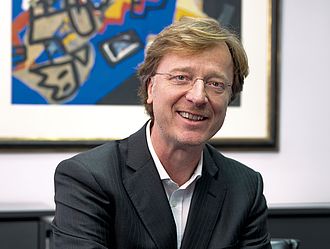
A voice for the industry
In a diverse and specialized industry such as analytical technology—which is highly technical and subject to numerous regulatory requirements—small specialists compete with large technology conglomerates. SPECTARIS succeeds in uniting the interests of all its members and serves as the industry’s collective voice and advocate.
Albrecht Sieper, Managing Director of Elementar Analysensysteme GmbH
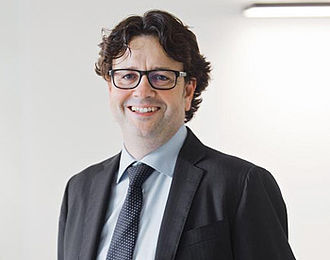
SPECTARIS is the ideal platform.
SPECTARIS provides us with the ideal platform for constructive dialogue with member companies and serves as a reliable voice for the laboratory industry in the realms of politics and science.
Dr. Gunther Wobser, Managing Partner of LAUDA DR. R. WOBSER GMBH & CO. KG
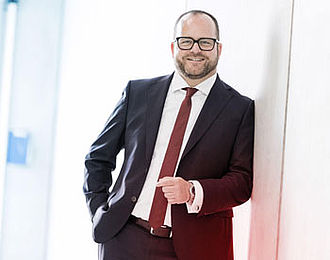
SPECTARIS fosters collaboration in our industry.
“The very informative discussions at SPECTARIS in Berlin and here at our office convinced me of SPECTARIS’s commitment and the quality of its work. In particular, the opportunity to combine topics from analytical, biotechnology, and laboratory technology with the field of medical technology is very interesting for Sigma,” I wrote upon joining in 2011. This has been confirmed, and today we are actively involved in several working groups.
Dr. Michael Sander, Managing Director of Sigma Laborzentrifugen GmbH
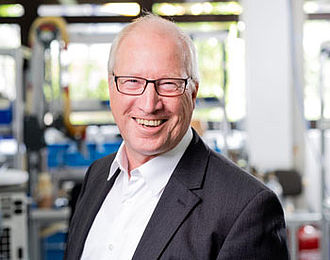
National advocacy group puts the spotlight on the industry
Laser Components benefits from the industry association in a variety of ways. As a company, we value the broad exchange of information within the working groups—whether in human resources, marketing, or export control, customs, and foreign trade practices. For our industry, Spectaris also serves as a political voice—the Photonics Trade Association not only maintains constant communication with the BMWi and BMBF ministries but also provides information on European initiatives.
Patrick Paul, Managing Director of LASER COMPONENTS GmbH
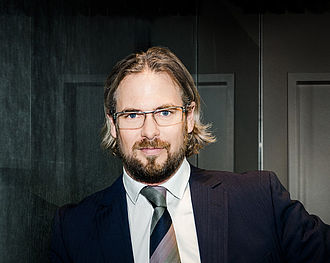
A Voice for Innovative Small and Medium-Sized Businesses
In the century of the photon, we need an advocacy group that is both strong and responsive. For us, as providers and consultants for the most innovative products on the global photonics market, this institution is particularly important. We know our interests (e.g., in the area of foreign trade) are in good hands, and we can focus on what matters most: satisfying our customers.
Andreas Börner, Managing Director of Laser 2000 GmbH

Our membership in the SPECTARIS industry association is of great value to us.
It not only gives us access to a strong network of leading companies across various high-tech industries, but also provides an important platform for professional exchange and continuing education. In addition, we benefit from the association’s strong advocacy with policymakers, the business community, and society at large, which plays a crucial role in creating a sustainable framework for the future. Through our membership in SPECTARIS, we can contribute our expertise, address current developments at an early stage, and jointly drive innovation and sustainable growth.
Frank Billhardt, Division Laser Protection EMEA, LASERVISION GmbH


