

Work 4.0
Special Feature: “Work 4.0—A Curse or a Blessing for Industry?”
Work 4.0. New Work. The Future of Work. These buzzwords are on everyone’s lips. Many say we’re on the verge of a revolution in the world of work. But what does this transformation mean for companies in the SPECTARIS industries? What challenges must companies face? What opportunities are emerging? At our annual reception on September 13, 2018, we explored this topic from all angles with top-tier experts. Reason enough for a comprehensive special feature on our website.
SPECTARIS Annual Reception 2018 - Work 4.0 - The Video
"Making Industry 4.0 and Work 4.0 a Success Story for Companies and Their Workforces"

Op-Ed by Oliver Wittke, Member of the Bundestag and Parliamentary State Secretary to the Federal Minister for Economic Affairs and Energy
The term Industry 4.0 refers to the convergence of manufacturing and information technologies, which enables a new level of organization and control of the value chain throughout the entire product lifecycle. The key resource here is the real-time digital availability of all relevant information, which is based on the interconnection of all entities involved in value creation. This gives rise to dynamic, self-organizing, and cross-organizational value-creation networks. Economically, this opens up new opportunities for more efficient utilization of production capacity, increased productivity, and the fulfillment of specific customer requests in single-unit production at the cost advantages of mass production.
Sensoren, Maschinen und Produkte werden „smart". Die Auswertung und Nutzung aller dort generierten Daten, die so genannte Big Data-Analyse, ist zugleich die Basis für neue Geschäftsmodelle. Unternehmen können dem Kunden zusätzliche Funktionen oder neue Dienstleistungen offerieren.
Das in der vierten industriellen Revolution liegende Potenzial entfaltet sich stetig. Die USA setzen vor allem auf neue, datengetriebene Geschäftsmodelle und Plattformen. Deutsche Industrieunternehmen haben dagegen traditionell ihre Stärken im Bereich der Produktionstechnologien. Als globaler Fabrikausrüster sind viele unserer namhaften Unternehmen erfolgreich dabei, die Digitalisierung der Industrie voranzutreiben.
Damit neue Industrie 4.0-Lösungen und Angebote möglich werden, gilt es, zukunftsweisende Lösungen zu erarbeiten und auf ihre Alltagstauglichkeit in den Bereichen Standards, IT-Sicherheit und Arbeit zu testen. Hinzu kommen juristische Fragestellungen zum Vertragsrecht, zur Nutzung von Daten oder zur Produkthaftung bei autonom agierenden Maschinen.
Die Entwicklung einheitlicher und offener Standards ist eine der wesentlichen technischen Voraussetzungen, um interoperable Schnittstellen zwischen Maschinen und über Wertschöpfungsketten hinweg sicherzustellen. Nur wenn sämtliche Informationen erfasst und verarbeitet werden können, gelingt eine reibungslose Vernetzung entlang der Wertschöpfungskette.
Eng mit dem Thema Standards ist das Thema IT-Sicherheit verknüpft. Integrität und Authentizität der ausgetauschten elektronischen Informationen und der Schutz des geistigen Eigentums bei einer Industrie 4.0-Anwendung (z.B. im Datensatz der Konstruktion) sind unabdingbar.
Mit der Plattform Industrie 4.0 verfügen wir in Deutschland über eines der weltweit größten und schlagkräftigsten Expertennetzwerke im Bereich der Industrie 4.0. Die Plattform treibt sehr erfolgreich Themen wie Standardisierung oder IT-Sicherheit bei Industrie 4.0 voran. Ein Ziel ist es, einheitliche globale Grundlagen und Standards für Industrie 4.0 zu schaffen. Dieser Prozess wird durch mehrere internationale Kooperationen gestärkt. Gute Ergebnisse nutzen dann gerade auch unseren exportstarken kleinen und mittleren Unternehmen im internationalen Wettbewerb.
Bei der Umsetzung von Industrie 4.0-Lösungen in der Praxis hat das Thema Arbeit, Aus- und Weiterbildung und Qualifizierung einen hohen Stellenwert. Industrie 4.0 verändert die Art und Weise, wie Mensch und Maschinen in den Produktionshallen, aber auch in ganzen Wertschöpfungsnetzwerken über Unternehmensgrenzen hinweg miteinander kommunizieren und arbeiten. Es verändern sich die Anforderungen an die Beschäftigten: Die Aufgaben gehen über bisher erforderliche Tätigkeiten hinaus. Insbesondere die Fähigkeit, abstrakte Schnittstellen zu digitalisierten Maschinen bedienen zu können, wird auf allen Ebenen immer mehr nachgefragt. Jede Mitarbeiterin und jeder Mitarbeiter im Betrieb benötigt ein umfassenderes Produktionsverständnis als bisher, zudem ist eine digitale Basisqualifikation gefragt. Auch die so genannten „Firefighter", die als hochqualifizierte Beschäftigte schnell Probleme lösen können, werden verstärkt nachgefragt.
Entscheidend ist, wie die Transformation so gestaltet werden kann, dass möglichst viele der 15 Millionen direkt und indirekt sozialversicherungspflichtig Beschäftigten in der deutschen Industrie bei der Neuausrichtung integriert und motiviert werden. Lebenslanges Lernen und betriebliche Weiterbildung gewinnen vor diesem Hintergrund zunehmend an Bedeutung.
Die Bundesregierung sieht es als eine ihrer zentralen Aufgaben an, die digitale Transformation der deutschen Wirtschaft voranzutreiben und die dafür notwendigen Rahmenbedingungen zu schaffen. Ein besonderes Augenmerk gilt dabei unserem industriellen Mittelstand, den wir mit umfangreichen Maßnahmen bei der Digitalisierung unterstützen. Ein herausragendes Beispiel sind die inzwischen über 20 Mittelstand 4.0-Kompetenzzentren in Deutschland, an die sich Unternehmen mit ihren konkreten Fragestellungen wenden können. Wir haben in Deutschland ein starkes Transfer-Netzwerk Industrie 4.0, in dem viele engagierte Akteure regional, auf Länderebene und national den Transfer in den Mittelstand unterstützen. Dies sind gute Voraussetzungen für eine erfolgreiche Umsetzung von Industrie 4.0 in der Fläche.
„Industrie 4.0 - made in Germany“ ist weltweit zu einem Markenzeichen geworden, von dem Unternehmen und Beschäftigte hierzulande profitieren. Sowohl das Potenzial als auch die Herausforderungen der Industrie 4.0 sind groß. Die deutsche Industrie befindet sich in einer sehr guten Ausgangsposition, nicht zuletzt auch dank der erfolgreich gelebten Sozialpartnerschaft. Sie ist auf dem Weg, ihre Kompetenzen als globaler Fabrikausrüster von der analogen in die digitale Welt zu übertragen und dafür zu sorgen, dass die digitale Transformation der Industrie in Deutschland gesamtwirtschaftlich ein Erfolg wird. Diese gute Ausgangsposition wollen wir nutzen!
3 Questions for…
 As an employers' association, do you view the upcoming upheavals brought about by digitalization with optimism or concern?
It’s exciting, but it also means a lot of work to ensure that companies and their employees can take advantage of the opportunities offered by the new world of work. All these efforts will be worthwhile, and everyone will have to do their part—politicians, associations, unions, academia, companies, and, of course, employees.
In your opinion, what are the biggest challenges for entrepreneurs, but also for employees?
Companies must review their business models and adapt them to the realities of digitalization. Many companies have already made significant progress in this area, but others have not yet embraced digitalization at all. Overall, we need more flexibility to achieve this, not least in the organization of working hours. In the 2018 collective bargaining round for the metal and electrical industries, we created additional flexibility in working hours for both companies and employees. With regard to employees, the issue of skills development is particularly important. When job tasks and responsibilities are changing at a rapid pace, we must do everything we can to prepare employees for these changes. This applies to both initial training and continuing education. We have just achieved an important success in the area of vocational training: Together with VDMA, ZVEI, and IG Metall, Gesamtmetall has adapted vocational training in the metal and electrical trades to meet the requirements of digitalization and Industry 4.0. Starting with the new training year in fall 2018, companies will be able to train their new employees using the latest methods.
According to a study, German industry plans to invest 40 billion euros annually in Industry 4.0 applications by 2020. How can small and medium-sized enterprises keep up?
Small and medium-sized enterprises have particular strengths in the flexibility and creativity with which they can respond to changing market conditions. That is why I am confident that they will also be able to overcome the challenges of digitalization. Another strength of Germany as a business location is that research, development, and production are organized in clusters involving large corporations, small and medium-sized enterprises, and research institutions. However, it would certainly be helpful if the federal government would finally implement the promised tax incentives for research and innovation, which will provide relief to small and medium-sized enterprises in particular.
 The digital transformation is well underway and is changing the way we live and work. For some people, this sparks enthusiasm and curiosity, while others express concerns and reservations. Where does the DGB stand on this?
The DGB aims to shape this far-reaching structural change. It is open to technological developments and is committed to placing people at the center of this change. Digital transformation is a process that can be shaped.
The DGB and its member unions emphasize that empowerment is a key approach to ensuring decent work amid digital transformation. What does this mean specifically for employers, and what does it mean for the workforce?
People must be empowered to adapt to change and keep pace with the tremendous speed at which it is occurring. This can only be achieved through training tailored to specific needs. It requires a cultural shift within companies and a change in mindset among many employees. Learning on the job must become the norm.
Quite a few people view the digital transformation with concern because they see their jobs as being at risk. Is this concern justified? And if so, what can policymakers, the business community, and society do to prevent such job losses?
Some jobs will disappear, and new ones will be created. It is still difficult to make reliable predictions about exactly how many of each there will be. What is important is a serious debate about the opportunities and risks—not just in terms of numbers, but also regarding the overall social impact of digital transformation.
 Sartorius AG has been actively engaged with the topics of Industry 4.0 and digital transformation for years. What does an “Employer 4.0” actually need?
In the pharmaceutical industry, the transition to Industry 4.0 is in full swing—digitalization is really picking up speed right now. We are not only working to further digitize our internal structures, but we are also supporting our customers’ digital transformation by offering them products such as data analysis tools and bioanalytical systems that simplify and accelerate the development and production of biopharmaceuticals.
We evaluate digital transformation from the customer’s perspective: assessing the changes brought about by digital transformation in terms of customer value and capitalizing on the opportunities they present. As a company, we follow the same approach: the opportunities we turn into products through digital transformation are opportunities for us and our employees, as they empower us to do what it takes to put this understanding of our customers into practice.
Sartorius Stedim Biotech (SSB) recently entered into a long-term partnership with Siemens in the field of automation. What is the goal of this partnership, and what do you hope to achieve through it?
Through our partnership with Siemens AG, we aim to offer our customers worldwide a standardized automation platform for the products and systems they use to manufacture biopharmaceuticals. That is why, going forward, we will primarily equip our single-use bioreactors, filtration systems, and other equipment with automation technologies from Siemens. By standardizing these products, we make it easier for customers to integrate their systems into overarching automation solutions while also enabling them to scale processes more easily from the laboratory scale all the way to commercial production. The partnership with Siemens thus ensures greater efficiency, quality, and flexibility in the manufacture of drugs.
What advice would you give to companies that are just beginning to tackle the challenges of Work 4.0? Are there any surefire ways to successfully adapt a company to digitalization?
A modern, connected, and dynamic work environment places new demands on everyone in the company—in terms of strategies, skills, and processes. Every company must navigate this development process on its own terms.
 Your website says: “Every company must ask itself, ‘What does New Work mean for us? How do we want to work together in the future?’” That sounds as if there’s no one-size-fits-all solution, doesn’t it?
That’s right—it all starts with the definition of New Work. The origins of New Work, as defined by Prof. Fritjof Bergmann during the steel and automotive crises of the mid-1970s in the U.S., are quite different from what the term has come to mean in recent years due to marketing. Nevertheless, there is a lot of substance to it; there is no magic formula.
What do the upcoming changes brought about by Work 4.0 actually mean for leaders and their leadership styles?
In corporate management, we are shifting from simple to complex systems. “Ambidexterity” is a buzzword that aptly describes the balance between stability and agility. The challenge for leaders lies in authentically applying multiple systems, work methods, and leadership styles depending on the situation.
The success of new work models also depends on the existing workforce and its willingness to embrace change. What factors must be considered if “Work 4.0” is to succeed in your own company?
Change doesn’t happen overnight; it takes time and consistency. The more consistently changes are driven from the top, the more successful they are. In addition to all managers (and employees) serving as authentic role models, comprehensive support is essential. Without sufficient time for dialogue, space for discussion and experimentation, and training in new methods, success is unlikely.
 In 2018, the BMBF is looking to the future with the Year of Science—more specifically, at the “workplaces of the future.” Has the current Year of Science provided any answers yet? How will we be working in—let’s say—15 years?
For us, the title of the Year of Science says it all. We don’t believe anyone can predict how we’ll be working in 15 years. Rather, there will be many different “worlds.” Working hours, work locations, and work environments are becoming increasingly flexible. We’re gaining more and more opportunities to shape our own work environments—and that is precisely what will become the “work worlds of the future.” We can all contribute to shaping this future, and during the Year of Science, we’re already seeing approaches from research in the fields of work, production, and services that point to future possibilities for our work.
The ministry’s website states: “Progress must not dictate people’s lives; rather, the opposite is true.” What does this mean exactly? What must policymakers, the business community, and society keep in mind during the digital transformation so that we are not overwhelmed by progress?
Our motto is: Experience, Learn, Create! During the Year of Science, we’re bringing these possibilities closer to people through the exhibition ship “MS Wissenschaft,” as well as through discussions and events. You can experience all the possibilities that science, education, and research have to offer. When we experience these possibilities, we can also learn how to apply them. This is also a matter of continuing education and professional development—lifelong learning isn’t just a buzzword for the “working world of the future”; it’s becoming a lived reality for all of us. And based on these experiences and an exploration of the possibilities, we can make decisions and shape our future. This applies to politics and business just as much as it does to all citizens. What kind of world do we want? What kind of future do we want to shape? These are questions that will continue to occupy our minds in the years following the Year of Science 2018.
Many people also view the digital transformation with concern, fearing, for example, for their jobs. How do you address such fears?
There are now several studies pointing in the same direction. Work is going to change. This does not mean there will be less work; rather, the demands placed on the workforce will change. Our education system is well-equipped to handle this. Adjustments are already being made in vocational training, continuing education, and higher education. Just take, for example, the vocational training regulations, which are already being updated and adapted to the new conditions.
Pictures from the panel discussion (Photos: Sablotny)


Your Contact Person

What Our Members Say
SPECTARIS acts as a strong association that vigorously represents the interests of its members in the political, business, and social spheres.
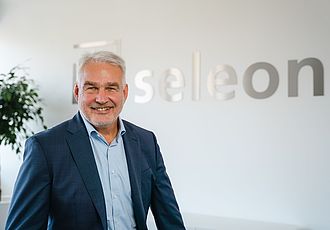
“SPECTARIS acts as a strong association that vigorously represents its members’ interests in the political, business, and social spheres. As members, we have the opportunity to actively raise our concerns and help shape the agenda to ensure that our voice is heard in relevant political and social discussions. In addition, through SPECTARIS, we have access to a broad network of companies, experts, and decision-makers from the high-tech industry. This allows us to forge valuable contacts and leverage synergies. Through this exchange, we and other members can benefit from each other’s experiences and expertise.”
Frank-Martin Rammelt, Managing Director of seleon GmbH
Together, we are strong.
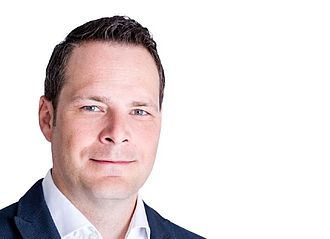
Together we are strong—That is why we value the strong network and the open and excellent collaboration within the association, which allows us, as one of the leading manufacturers, to work together on solutions to the modern challenges in the contact lens industry, to collaborate on joint campaigns, and to capitalize on identified trends.
Johannes Zupfer, General Manager for Germany, Austria, and Switzerland, CooperVision GmbH
Advancing Photonics
Photonics is one of the most innovative key industries and places high demands on the organizations that represent its interests. SPECTARIS meets these demands in a compelling manner. As a strong industry association, SPECTARIS effectively represents the interests of its members in the political, business, and social spheres, while also promoting exchange and networking within the industry. We thank SPECTARIS for this commitment and greatly value our trusting collaboration.
Dr. Ralf Kuschnereit, JENOPTIK AG

OBE relies on high-quality products “Made in Germany.”
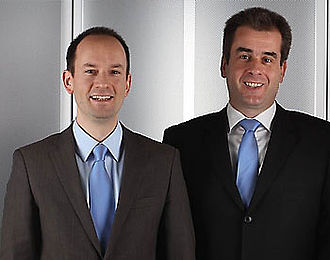
OBE relies on high-quality products “Made in Germany.” Thanks to innovation and automation, spring hinges and security screws can be manufactured in large quantities at the Ispringen facility. This goes hand in hand with increased productivity and a division of labor for simple products at our facility in China. In this way, we secure jobs in Germany.
Peter Specht / Erik Schäfer - Managing Directors, OBE
Community makes us strong!
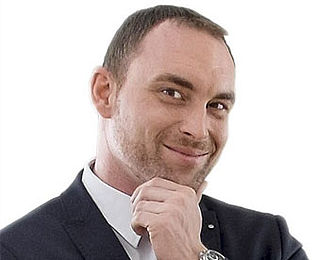
For us as medium-sized companies, the SPECTARIS association serves as a bridge between the government and our interests—our collective strength makes us stronger! We appreciate the very helpful continuing education program in the field of medical technology and benefit from the organization of a wide variety of delegation trips. Our membership in SPECTARIS also ensures that we receive regular updates on new regulatory requirements.
Maik Greiser, Managing Partner / CEO, ATMOS MedizinTechnik GmbH & Co. KG
The association offers services that are perfectly tailored to our needs.
Our industry association, SPECTARIS, is a strong advocate for the interests of medium-sized, owner-managed companies like ours. It is just as important to us that the association provides a platform for open dialogue among member companies and offers services—such as industry reports and events focused on specific topics—that are perfectly tailored to our needs.
Managing Partners of Jüke Systemtechnik GmbH, Martin Hovestadt (left) and Heinrich Jürgens (right)
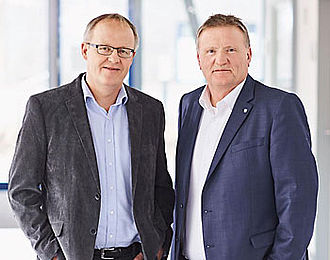
A Voice for Medical Technology
For us as a medical technology manufacturer, SPECTARIS serves as an important voice in our dealings with policymakers. Especially in light of the current MDR, it is immensely important to have a strong and effective association to represent our interests. We are very satisfied with our collaboration and feel well represented.
Regina Kirchner-Gottschalk, Managing Director of KaWe – KIRCHNER & WILHELM GmbH + Co. KG
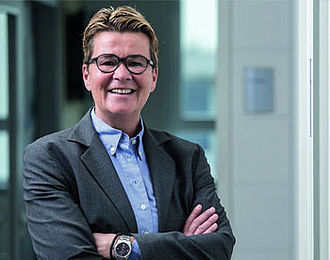
Innovation drives us forward
Demands are growing, markets are changing—but innovation opens up new paths for us. With digital progress, bold ideas, and modern processes, we are shaping the standards of tomorrow. As a SPECTARIS member, we leverage the strength of the network to actively shape the future in this dynamic environment.
Fabian Bohnen, COO / Stephan Börner, CEO, Ofa Bamberg GmbH

What we particularly appreciate about SPECTARIS is its technical expertise.
As a medium-sized medical technology company, Richard Wolf benefits greatly from SPECTARIS’s extensive network. We particularly value their technical expertise.
Management of Richard Wolf GmbH: Mr. Pfab, Mr. Steinbeck
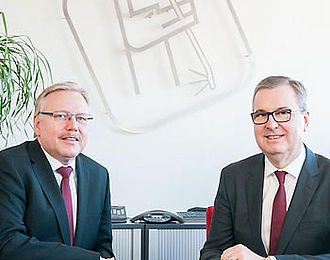
It's worth getting involved!
In times of rapid and far-reaching changes in the medtech industry and a challenging regulatory environment, SPECTARIS is an important partner for our company and plays an indispensable role as an advocate for our interests in Berlin and Brussels. It’s worth getting involved!
Bert Sutter, Managing Director, Sutter Medizintechnik GmbH
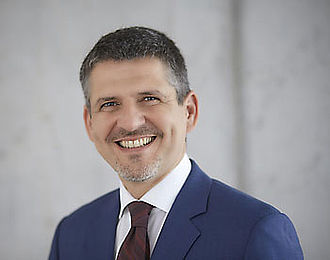
We want to be a trusted partner for our laboratory customers, both today and in the future.
SPECTARIS’s in-depth information on industry and technology trends, as well as the regulatory landscape, is just as important to us as its advocacy work in Berlin and Brussels. The dedicated SPECTARIS team is always a great point of contact for us.
Dr. Christoph Schöler, Managing Partner, BRAND GMBH + CO KG, VACUUBRAND GMBH + CO KG
A voice for the industry
In a diverse and specialized industry such as analytical technology—which is highly technical and subject to numerous regulatory requirements—small specialists compete with large technology conglomerates. SPECTARIS succeeds in uniting the interests of all its members and serves as the industry’s collective voice and advocate.
Albrecht Sieper, Managing Director of Elementar Analysensysteme GmbH
SPECTARIS is the ideal platform.
SPECTARIS provides us with the ideal platform for constructive dialogue with member companies and serves as a reliable voice for the laboratory industry in the realms of politics and science.
Dr. Gunther Wobser, Managing Partner of LAUDA DR. R. WOBSER GMBH & CO. KG
SPECTARIS fosters collaboration in our industry.
“The very informative discussions at SPECTARIS in Berlin and here at our office convinced me of SPECTARIS’s commitment and the quality of its work. In particular, the opportunity to combine topics from analytical, biotechnology, and laboratory technology with the field of medical technology is very interesting for Sigma,” I wrote upon joining in 2011. This has been confirmed, and today we are actively involved in several working groups.
Dr. Michael Sander, Managing Director of Sigma Laborzentrifugen GmbH
National advocacy group puts the spotlight on the industry
Laser Components benefits from the industry association in a variety of ways. As a company, we value the broad exchange of information within the working groups—whether in human resources, marketing, or export control, customs, and foreign trade practices. For our industry, Spectaris also serves as a political voice—the Photonics Trade Association not only maintains constant communication with the BMWi and BMBF ministries but also provides information on European initiatives.
Patrick Paul, Managing Director of LASER COMPONENTS GmbH
A Voice for Innovative Small and Medium-Sized Businesses
In the century of the photon, we need an advocacy group that is both strong and responsive. For us, as providers and consultants for the most innovative products on the global photonics market, this institution is particularly important. We know our interests (e.g., in the area of foreign trade) are in good hands, and we can focus on what matters most: satisfying our customers.
Andreas Börner, Managing Director of Laser 2000 GmbH
Our membership in the SPECTARIS industry association is of great value to us.
It not only gives us access to a strong network of leading companies across various high-tech industries, but also provides an important platform for professional exchange and continuing education. In addition, we benefit from the association’s strong advocacy with policymakers, the business community, and society at large, which plays a crucial role in creating a sustainable framework for the future. Through our membership in SPECTARIS, we can contribute our expertise, address current developments at an early stage, and jointly drive innovation and sustainable growth.
Frank Billhardt, Division Laser Protection EMEA, LASERVISION GmbH


