

Networks Strengthen STEM Education
STEM education can help address future challenges
STEM education is part of a comprehensive education—especially in an age shaped by technological and scientific innovations and challenges, such as digitalization, across all areas of society. An understanding of mathematics, computer science, the natural sciences, and technology is essential for individual personal development as well as for responsible participation in the social discourse on national and global challenges.
STEM education has the potential to make a significant contribution to addressing future challenges, such as shaping the transition to a low-carbon economy, overcoming the COVID-19 pandemic, and digitizing the education system. However, for this to happen, it must be at the top of the political agenda during the next legislative term.
Germany has significant strengths in STEM education, with numerous stakeholders committed to effectively supporting the next generation of STEM talent. Unfortunately, despite the strong commitment—including from the federal and state governments—efforts have so far failed to address the weaknesses, some of which have been further exacerbated by the pandemic. These range from mediocre to poor results in assessments of students’ competencies, to an ever-widening STEM skills gap in future-oriented professions, and insufficient participation by girls and young women in both academic and vocational training. In addition, there is a dramatic shortage of STEM teachers. To solve these problems, the federal government, the states, and local authorities must, above all, cooperate within the framework of strategically coordinated comprehensive strategies, while also involving the business community and civil society.
The MINT Report is published twice a year by the Cologne Institute for Economic Research:

The demand for STEM workers is on the rise again
One year later, the effects of the COVID-19 restrictions in place since March 2020 have almost been offset: Between March and September 2020, demand for STEM professionals—and thus the STEM skills gap—fell to 49% of the long-term average. By April 2021, this figure had risen again to 69%, and in the academic sector, it had even reached 91%. Overall, there was a shortage of approximately 145,100 workers in STEM professions in April 2021. Looking ahead to the next five years, companies place a high priority on securing skilled workers (67.8%), digitalization (65.4%), and the energy transition (37.3%).
The demographic-driven shortage of STEM professionals is growing.
The “demographic replacement need” will rise considerably in the coming years and will not be met. Two-thirds of new academic talent will be needed just to meet this replacement need; the annual supply of newly qualified professionals will already fall far short of meeting it.
Digitalization is increasing the demand for IT experts and IT professionals.
Overall, 40 percent of companies expect an increase in demand for IT experts, and 54 percent expect an increase in demand for IT professionals. Among companies that place a very high priority on digitalization, these figures rise to 69 percent for IT experts and 75 percent for IT professionals.
Climate protection is increasing the demand for STEM professionals.
When it comes to developing climate-friendly technologies and products, 32 percent of companies expect an increased need for IT specialists, 19 percent expect an increased need for engineers and environmental engineers, and 15 percent expect a growing need for other STEM specialists. Among large companies, these figures rise to 63 percent for IT experts, 43 percent for engineers and environmental engineers, and 32 percent for other STEM experts.
The pandemic is reducing the supply of young STEM professionals.
Empirical studies show that learning losses in STEM subjects have occurred in schools during the pandemic. This could mean a regression in STEM subjects to the proficiency level of the year 2000 (the “PISA shock”). Furthermore, due to the pandemic, negative effects on career and college choices in STEM fields among girls and young women are to be expected. A higher dropout rate among STEM students is also anticipated, and there are fewer international students coming to Germany from abroad to study STEM subjects.
Advancing the Digital Transformation of Educational Institutions
Rapid expansion of digital infrastructure in schools (learning and teaching; hardware and software), implementation of the Digital Pact for Schools, and development of a nationwide digital education platform. IT administrators for educational institutions: Teachers need support in using digital technologies in the classroom and in guiding students during homeschooling. Information and computer-related education must be integrated into teacher training, and additional professional development opportunities for digital learning formats must be created. The development of intelligent (AI-supported) learning software that motivates students and can address learning deficits must be accelerated.
Strengthening STEM Education in Schools
Implement standardized tests and a support program to identify COVID-related learning gaps across grade levels. Develop strategies to help students catch up on missed learning during summer break, on weekends, and in the afternoons. Expand digital literacy and IT as a school subject, and ensure a better supply of STEM teachers. The shortage of teachers in STEM subjects will continue to grow in the coming years. Teacher training capacity must be expanded, and career changers and those switching fields must be qualified.
Expand immigration
We must make better use of the opportunities offered by the Skilled Workers Immigration Act to attract more immigrants from abroad to pursue STEM careers in Germany, thereby strengthening research in digitalization and decarbonization. To this end, bureaucratic immigration processes must be streamlined, and targeted efforts must be made to recruit immigrants from abroad. Furthermore, immigration through the education system should be further strengthened with appropriate resources and capacity.
Additional Measures
Increase investment in research—particularly in the areas of decarbonization and digitalization. Meet the future demand for new skills—identify early on the skills that will be needed in the future and develop appropriate continuing education programs
To put these recommendations into practice, the National STEM Forum advocates for the launch of a STEM Action Program 2.0 during the upcoming legislative term. To achieve this, the federal government, the states, and local authorities must cooperate within the framework of strategically coordinated comprehensive plans, while also involving the business community and civil society. The structural lack of accountability in education policy must end in favor of a commitment to cooperation. STEM education and the shortage of skilled workers are key issues that also affect labor market, economic, environmental, health, transportation, and family policies. In the future, there must be greater interministerial collaboration and thinking at the federal level in order to better leverage synergies.
STEM on the Ground
In Germany, there are more than 120 regional networks dedicated to strengthening STEM education at the local level.
The state-wide coordination offices are not limited to specific regions but rather connect various STEM regions within a single state.
Objectives:
- Develop, consolidate, and make STEM programs accessible
- Early Childhood/Preschool Education
- Support for Girls
- Promoting Talent in STEM Fields
- Training Teachers
- Academic and Career Guidance
- Ensuring a New Generation of Skilled Workers
Activities:
- Event Days and Exhibitions
- Career Guidanceevents
- Teacher Training Programs
- Networking Event
- Student Lab/Research Workshop
- Teaching Materials
- Presentations/Workshops
- Contests
More information here:STEM Regions: STEM Regions in Germany
Promoting STEM Talent
The nationwide association “Verein zur MINT-Talentförderung e.V.” was founded with the goal of consistently and purposefully supporting the most talented students in STEM fields in schools. Its founding partners are the Siemens Foundation, the VDI Association of German Engineers, the TÜV SÜD Foundation, and the Association of Family Entrepreneurs. Since 2018, the association has also been supported by the Gisela and Erwin Sick Foundation. The association establishes STEM Excellence Tracks at boarding schools in all federal states and organizes the Germany-wide scouting of gifted students. The association’s program for this initiative is called plus-MINT.
Objectives:
- Support for Gifted Students
- Identifying, Connecting, and Supporting STEM Talent (Students in 9th Grade and Above)
- Plus-MINT Centers of Excellence in Boarding Schools
- Within 10 years, Plus-MINT centers of excellence are to be established in all federal states
For more information, visit+MINT – Talent Development (plus-mint.de)
MINT-EC - The National Network of Schools of Excellence
MINT-EC is the national network of excellence for high schools with outstanding programs in mathematics, science, and technology. Its goal is to support these flagship schools as they develop into MINT talent incubators by providing top-notch opportunities for students, teachers, and school administrators.
Objectives:
- Recruiting Students for STEM Degree Programs and Vocational Training Programs
- Establishing cooperation networks between schools, businesses, colleges, and research institutes
- Professional Development for STEM Teachers
- Strengthening the self-organization of schools designated as STEM-focused schools
- Advancing Digitalization in Schools
Activities:
- Competitions and research events for high school students in collaboration with schools, colleges, research institutes, and companies
- Principal Conferences and Training Sessions
- HPI School Cloud Pilot Project: Development of a Digital Teaching and Learning Platform in Collaboration with MINT-EC Schools
- Alumni Network for Former MINT-EC Students
Radius:
- 332 high schools and schools with a high school division
- 353,000 students
- 29,000 teachers
For more information, seeWelcome: MINT-EC
Your Contact Person
Guide to STEM Education Support
The guide "Promoting STEM" provides information on:
- STEM Subjects and STEM Support
- Educational Programs on STEM in Schools
- Extracurricular STEM Learning Centers
- Events and Competitions for Students Interested in STEM
- STEM Professions and Potential Career Paths
You can find the guide here.
What Our Members Say
SPECTARIS acts as a strong association that vigorously represents the interests of its members in the political, business, and social spheres.
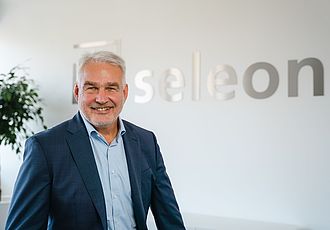
“SPECTARIS acts as a strong association that vigorously represents its members’ interests in the political, business, and social spheres. As members, we have the opportunity to actively raise our concerns and help shape the agenda to ensure that our voice is heard in relevant political and social discussions. In addition, through SPECTARIS, we have access to a broad network of companies, experts, and decision-makers from the high-tech industry. This allows us to forge valuable contacts and leverage synergies. Through this exchange, we and other members can benefit from each other’s experiences and expertise.”
Frank-Martin Rammelt, Managing Director of seleon GmbH
Together, we are strong.
Together we are strong—That is why we value the strong network and the open and excellent collaboration within the association, which allows us, as one of the leading manufacturers, to work together on solutions to the modern challenges in the contact lens industry, to collaborate on joint campaigns, and to capitalize on identified trends.
Johannes Zupfer, General Manager for Germany, Austria, and Switzerland, CooperVision GmbH
Advancing Photonics
Photonics is one of the most innovative key industries and places high demands on the organizations that represent its interests. SPECTARIS meets these demands in a compelling manner. As a strong industry association, SPECTARIS effectively represents the interests of its members in the political, business, and social spheres, while also promoting exchange and networking within the industry. We thank SPECTARIS for this commitment and greatly value our trusting collaboration.
Dr. Ralf Kuschnereit, JENOPTIK AG

OBE relies on high-quality products “Made in Germany.”
OBE relies on high-quality products “Made in Germany.” Thanks to innovation and automation, spring hinges and security screws can be manufactured in large quantities at the Ispringen facility. This goes hand in hand with increased productivity and a division of labor for simple products at our facility in China. In this way, we secure jobs in Germany.
Peter Specht / Erik Schäfer - Managing Directors, OBE
Community makes us strong!
For us as medium-sized companies, the SPECTARIS association serves as a bridge between the government and our interests—our collective strength makes us stronger! We appreciate the very helpful continuing education program in the field of medical technology and benefit from the organization of a wide variety of delegation trips. Our membership in SPECTARIS also ensures that we receive regular updates on new regulatory requirements.
Maik Greiser, Managing Partner / CEO, ATMOS MedizinTechnik GmbH & Co. KG

The association offers services that are perfectly tailored to our needs.
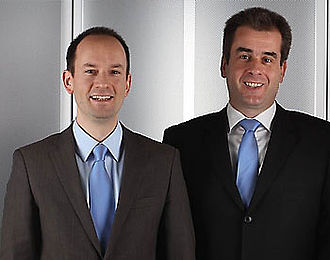
Our industry association, SPECTARIS, is a strong advocate for the interests of medium-sized, owner-managed companies like ours. It is just as important to us that the association provides a platform for open dialogue among member companies and offers services—such as industry reports and events focused on specific topics—that are perfectly tailored to our needs.
Managing Partners of Jüke Systemtechnik GmbH, Martin Hovestadt (left) and Heinrich Jürgens (right)
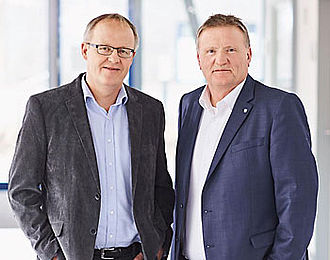
A Voice for Medical Technology
For us as a medical technology manufacturer, SPECTARIS serves as an important voice in our dealings with policymakers. Especially in light of the current MDR, it is immensely important to have a strong and effective association to represent our interests. We are very satisfied with our collaboration and feel well represented.
Regina Kirchner-Gottschalk, Managing Director of KaWe – KIRCHNER & WILHELM GmbH + Co. KG
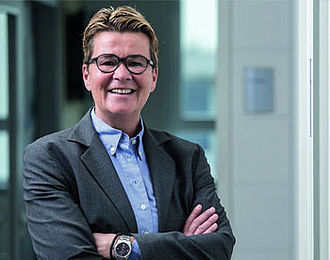
Innovation drives us forward
Demands are growing, markets are changing—but innovation opens up new paths for us. With digital progress, bold ideas, and modern processes, we are shaping the standards of tomorrow. As a SPECTARIS member, we leverage the strength of the network to actively shape the future in this dynamic environment.
Fabian Bohnen, COO / Stephan Börner, CEO, Ofa Bamberg GmbH

What we particularly appreciate about SPECTARIS is its technical expertise.
As a medium-sized medical technology company, Richard Wolf benefits greatly from SPECTARIS’s extensive network. We particularly value their technical expertise.
Management of Richard Wolf GmbH: Mr. Pfab, Mr. Steinbeck
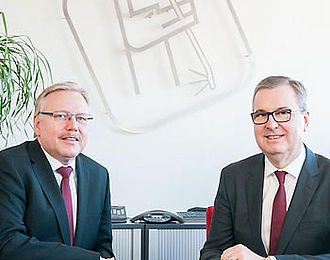
It's worth getting involved!
In times of rapid and far-reaching changes in the medtech industry and a challenging regulatory environment, SPECTARIS is an important partner for our company and plays an indispensable role as an advocate for our interests in Berlin and Brussels. It’s worth getting involved!
Bert Sutter, Managing Director, Sutter Medizintechnik GmbH
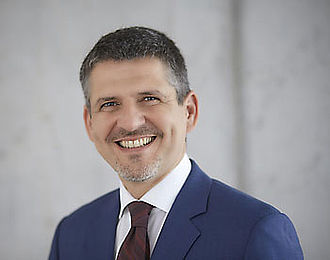
We want to be a trusted partner for our laboratory customers, both today and in the future.
SPECTARIS’s in-depth information on industry and technology trends, as well as the regulatory landscape, is just as important to us as its advocacy work in Berlin and Brussels. The dedicated SPECTARIS team is always a great point of contact for us.
Dr. Christoph Schöler, Managing Partner, BRAND GMBH + CO KG, VACUUBRAND GMBH + CO KG
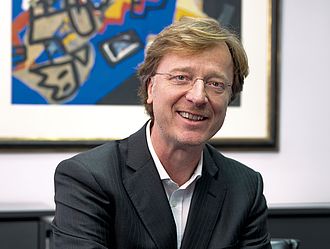
A voice for the industry
In a diverse and specialized industry such as analytical technology—which is highly technical and subject to numerous regulatory requirements—small specialists compete with large technology conglomerates. SPECTARIS succeeds in uniting the interests of all its members and serves as the industry’s collective voice and advocate.
Albrecht Sieper, Managing Director of Elementar Analysensysteme GmbH
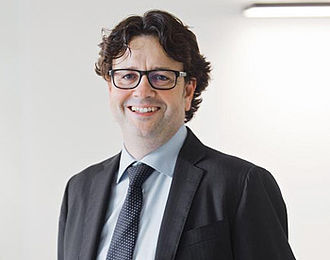
SPECTARIS is the ideal platform.
SPECTARIS provides us with the ideal platform for constructive dialogue with member companies and serves as a reliable voice for the laboratory industry in the realms of politics and science.
Dr. Gunther Wobser, Managing Partner of LAUDA DR. R. WOBSER GMBH & CO. KG
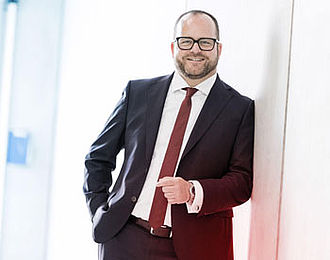
SPECTARIS fosters collaboration in our industry.
“The very informative discussions at SPECTARIS in Berlin and here at our office convinced me of SPECTARIS’s commitment and the quality of its work. In particular, the opportunity to combine topics from analytical, biotechnology, and laboratory technology with the field of medical technology is very interesting for Sigma,” I wrote upon joining in 2011. This has been confirmed, and today we are actively involved in several working groups.
Dr. Michael Sander, Managing Director of Sigma Laborzentrifugen GmbH
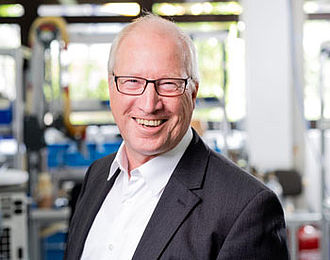
National advocacy group puts the spotlight on the industry
Laser Components benefits from the industry association in a variety of ways. As a company, we value the broad exchange of information within the working groups—whether in human resources, marketing, or export control, customs, and foreign trade practices. For our industry, Spectaris also serves as a political voice—the Photonics Trade Association not only maintains constant communication with the BMWi and BMBF ministries but also provides information on European initiatives.
Patrick Paul, Managing Director of LASER COMPONENTS GmbH
A Voice for Innovative Small and Medium-Sized Businesses
In the century of the photon, we need an advocacy group that is both strong and responsive. For us, as providers and consultants for the most innovative products on the global photonics market, this institution is particularly important. We know our interests (e.g., in the area of foreign trade) are in good hands, and we can focus on what matters most: satisfying our customers.
Andreas Börner, Managing Director of Laser 2000 GmbH
Our membership in the SPECTARIS industry association is of great value to us.
It not only gives us access to a strong network of leading companies across various high-tech industries, but also provides an important platform for professional exchange and continuing education. In addition, we benefit from the association’s strong advocacy with policymakers, the business community, and society at large, which plays a crucial role in creating a sustainable framework for the future. Through our membership in SPECTARIS, we can contribute our expertise, address current developments at an early stage, and jointly drive innovation and sustainable growth.
Frank Billhardt, Division Laser Protection EMEA, LASERVISION GmbH


