

How SARS-CoV-2 Is Changing Medical Technology
A new study by SPECTARIS and Roland Berger shows that competition is intensifying, and digital excellence and sales strategies are more important than ever

The COVID-19 crisis is not only affecting the current revenue trends in the German medical technology industry. Rather, experts also anticipate fundamental changes in the market and competitive landscape over the medium to long term, which will bring both opportunities and challenges. This is demonstrated by the trend report “How SARS-CoV-2 Is Changing the Medical Technology Industry” by the German industry association SPECTARIS and Roland Berger, which was published in cooperation with the MedicalMountains industry cluster on the occasion of the leading trade fair virtual.MEDICA. The findings are based on expert interviews and a survey of approximately 500 companies. They make it clear that only those companies that set the right course now will be among the “pioneers” who, through digital excellence, succeed in tapping into new markets and customer contacts—both during the crisis and beyond. Many smaller companies, which are already being hit much harder by the effects of the pandemic, face the threat of going out of business in light of persistently high price pressure and regulatory burdens, as well as increasing market consolidation.
A brief interview with Dr. Thilo Kaltenbach, Senior Partner at Roland Berger, and Jörg Mayer, Managing Director of SPECTARIS:
Which result from the survey surprised you the most?
Thilo Kaltenbach: The pace at which the gap between large and small companies is widening in the wake of the pandemic. Small companies are suffering significantly more from the consequences, and the market will undergo noticeable consolidation.
Jörg Mayer: This trend is indeed cause for concern. However, I also see positive signs coming from the industry. For example, many of our member companies are showing great openness to new digital formats, whether in sales, in internal collaboration, or in their work with customers.
Mr. Mayer, what do you think the “new normal” will look like in the industry?
Jörg Mayer: I think the key point is that the changes described are not an inevitable fate. Given the current circumstances, every company has the opportunity to take control of its own future.
Thilo Kaltenbach: We expect the industry to divide into three groups in the future: The first group consists of the “pioneers.” They are well-positioned digitally and have a skilled workforce. They will be very successful in tapping into new markets and establishing customer relationships. We call the second group the “Preservers.” They can defend their current market position by taking advantage of the opportunities offered by digitalization, albeit with varying degrees of efficiency. Unfortunately, the “Laggards” group consists primarily of smaller companies. They are clearly the hardest hit.
What should companies do to take advantage of these opportunities?
Thilo Kaltenbach: First and foremost, they need to consistently embrace digitalization in order to gain access to new markets and customer segments. To do this, they need a fundamental strategy outlining the direction they want to take. But they also need processes, tools, and—above all—the right personnel to implement this strategy operationally.
Jörg Mayer: We don't have to reinvent the wheel every time. As an association, we offer extensive support so that members can learn from one another through the exchange of experiences and best practices. I believe there is still a great deal of untapped potential here.

Digitalization Plays a Central Role
Digitalization, which had progressed only slowly in recent years, has rapidly gained momentum. This is evident, for example, in the growing acceptance of telemedicine and digital outpatient care models, as well as in the accelerated digitization of processes in medical technology and hospitals. The COVID-19 pandemic has left a deep mark and heightened awareness of the importance of robust emergency plans and stable supply chains. Digitalization plays a central role here as well. In the study, more than seven out of ten respondents agreed with the statement that telemedicine, automation, and preventive diagnostics—as well as digital applications such as alert apps or digital tracking tools—will continue to gain importance and will be among the technology winners of the pandemic.
The crisis has set in motion a process that is irreversible. Digital work models, as well as sales, service, and exhibition concepts, now play a very significant role in the strategies of many companies and will continue to hold at least equal standing alongside traditional work methods and in-person customer interactions even after the pandemic. In the “war for talent,” the medical technology sector could benefit from its image as a systemically important industry with high social significance, thereby improving its access to engineers and digital experts. At the same time, the shortage of personnel in healthcare and nursing continues to drive up the demand for suitable solutions in support processes.
More than 80 percent of those surveyed for the study also believe that the pace of market consolidation has accelerated due to the pandemic. They expect this trend to primarily affect smaller companies. These companies were already under significant pressure prior to the pandemic due to the planned implementation of the new Medical Device Regulation, as substantial investments were required to prepare for the new approval processes. Many of their reserves have now been depleted. To make matters worse, despite current federal funding, budgetary constraints in the healthcare sector will persist in the coming years and will result in a correspondingly restrictive reimbursement policy.

THE FOLLOWING TOPICS SHOULD BE PART OF YOUR AGENDA FOR THE FUTURE:
1 DEVELOPING A ROADMAP FOR DIGITALIZATION
Most companies have no shortage of digitalization initiatives. However, translating these ambitions into an operational strategy with prioritized and coordinated measures is often much more difficult. Without a concrete roadmap, digital technologies—which are meant to ensure the future viability of medical technology companies’ business models—remain mere cost centers that yield neither the hoped-for efficiency gains nor attractive new business. Above all, however, the necessary cultural transformation will not succeed.
2 BUILDING DIGITAL SALES AND SERVICE EXPERTISE
When new customer acquisition and service no longer take place in person but primarily in the virtual space, companies need a new sales and communication culture. This isn’t just about ensuring that staff are proficient with the relevant tools; they must also be able to build the “good chemistry” necessary for a successful customer relationship.
3 EXPLORE PARTNERSHIPS AND ACQUISITIONS
Many small providers in the industry, in particular, have been struggling with massive declines in revenue and earnings in the wake of the pandemic. This makes them targets for investors—both domestic and foreign—eager to make acquisitions. Against this backdrop, it is advisable to consider partnerships with competitors or to explore potential acquisitions.
4 TALENTS TO RECRUIT
MedTech companies should seize the moment—which in this case means taking advantage of the often challenging situation facing key industries that are competing for the same talent. Now is a good time to strategically recruit new talent and high-potential employees. This applies to engineers, but also to other personnel relevant to further digitalization, such as data scientists.
5 SECURING THE SUPPLY CHAIN
COVID-19 will lead to a realignment of supply chains across all industries. The medical technology sector is no exception: According to our survey, nearly one in three companies is currently looking for new suppliers. Now is the time to restructure the supply chain to make it crisis-proof.
Your Contact Person

Read the "Corona Trend Report" study here as an e-paper!
How SARS-CoV-2 Is Changing Medical Technology – A New Study by SPECTARIS and Roland Berger
What Our Members Say
SPECTARIS acts as a strong association that vigorously represents the interests of its members in the political, business, and social spheres.
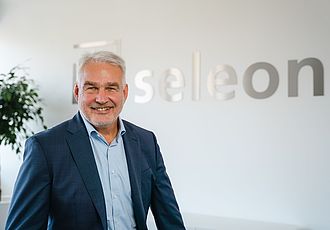
“SPECTARIS acts as a strong association that vigorously represents its members’ interests in the political, business, and social spheres. As members, we have the opportunity to actively raise our concerns and help shape the agenda to ensure that our voice is heard in relevant political and social discussions. In addition, through SPECTARIS, we have access to a broad network of companies, experts, and decision-makers from the high-tech industry. This allows us to forge valuable contacts and leverage synergies. Through this exchange, we and other members can benefit from each other’s experiences and expertise.”
Frank-Martin Rammelt, Managing Director of seleon GmbH
Together, we are strong.
Together we are strong—That is why we value the strong network and the open and excellent collaboration within the association, which allows us, as one of the leading manufacturers, to work together on solutions to the modern challenges in the contact lens industry, to collaborate on joint campaigns, and to capitalize on identified trends.
Johannes Zupfer, General Manager for Germany, Austria, and Switzerland, CooperVision GmbH

Advancing Photonics
Photonics is one of the most innovative key industries and places high demands on the organizations that represent its interests. SPECTARIS meets these demands in a compelling manner. As a strong industry association, SPECTARIS effectively represents the interests of its members in the political, business, and social spheres, while also promoting exchange and networking within the industry. We thank SPECTARIS for this commitment and greatly value our trusting collaboration.
Dr. Ralf Kuschnereit, JENOPTIK AG

OBE relies on high-quality products “Made in Germany.”
OBE relies on high-quality products “Made in Germany.” Thanks to innovation and automation, spring hinges and security screws can be manufactured in large quantities at the Ispringen facility. This goes hand in hand with increased productivity and a division of labor for simple products at our facility in China. In this way, we secure jobs in Germany.
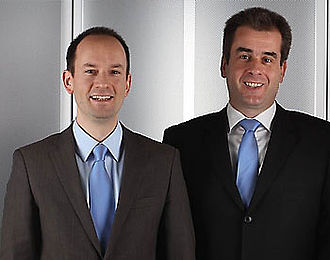
Peter Specht / Erik Schäfer - Managing Directors, OBE
Community makes us strong!
For us as medium-sized companies, the SPECTARIS association serves as a bridge between the government and our interests—our collective strength makes us stronger! We appreciate the very helpful continuing education program in the field of medical technology and benefit from the organization of a wide variety of delegation trips. Our membership in SPECTARIS also ensures that we receive regular updates on new regulatory requirements.
Maik Greiser, Managing Partner / CEO, ATMOS MedizinTechnik GmbH & Co. KG

The association offers services that are perfectly tailored to our needs.
Our industry association, SPECTARIS, is a strong advocate for the interests of medium-sized, owner-managed companies like ours. It is just as important to us that the association provides a platform for open dialogue among member companies and offers services—such as industry reports and events focused on specific topics—that are perfectly tailored to our needs.
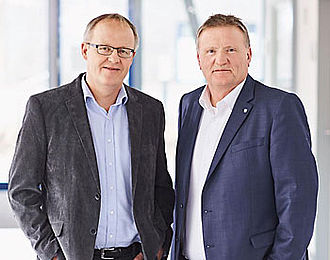
Managing Partners of Jüke Systemtechnik GmbH, Martin Hovestadt (left) and Heinrich Jürgens (right)
A Voice for Medical Technology
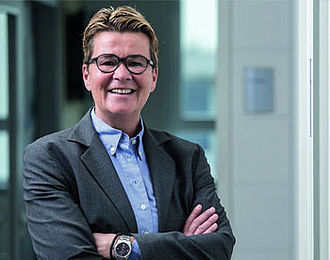
For us as a medical technology manufacturer, SPECTARIS serves as an important voice in our dealings with policymakers. Especially in light of the current MDR, it is immensely important to have a strong and effective association to represent our interests. We are very satisfied with our collaboration and feel well represented.
Regina Kirchner-Gottschalk, Managing Director of KaWe – KIRCHNER & WILHELM GmbH + Co. KG
Innovation drives us forward
Demands are growing, markets are changing—but innovation opens up new paths for us. With digital progress, bold ideas, and modern processes, we are shaping the standards of tomorrow. As a SPECTARIS member, we leverage the strength of the network to actively shape the future in this dynamic environment.
Fabian Bohnen, COO / Stephan Börner, CEO, Ofa Bamberg GmbH

What we particularly appreciate about SPECTARIS is its technical expertise.
As a medium-sized medical technology company, Richard Wolf benefits greatly from SPECTARIS’s extensive network. We particularly value their technical expertise.
Management of Richard Wolf GmbH: Mr. Pfab, Mr. Steinbeck
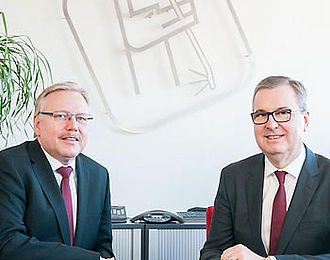
It's worth getting involved!
In times of rapid and far-reaching changes in the medtech industry and a challenging regulatory environment, SPECTARIS is an important partner for our company and plays an indispensable role as an advocate for our interests in Berlin and Brussels. It’s worth getting involved!
Bert Sutter, Managing Director, Sutter Medizintechnik GmbH
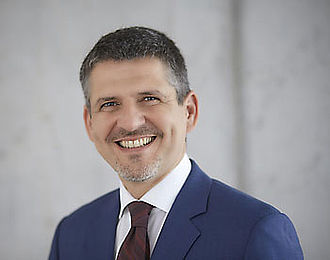
We want to be a trusted partner for our laboratory customers, both today and in the future.
SPECTARIS’s in-depth information on industry and technology trends, as well as the regulatory landscape, is just as important to us as its advocacy work in Berlin and Brussels. The dedicated SPECTARIS team is always a great point of contact for us.
Dr. Christoph Schöler, Managing Partner, BRAND GMBH + CO KG, VACUUBRAND GMBH + CO KG

A voice for the industry
In a diverse and specialized industry such as analytical technology—which is highly technical and subject to numerous regulatory requirements—small specialists compete with large technology conglomerates. SPECTARIS succeeds in uniting the interests of all its members and serves as the industry’s collective voice and advocate.
Albrecht Sieper, Managing Director of Elementar Analysensysteme GmbH
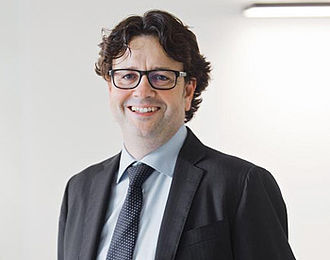
SPECTARIS is the ideal platform.
SPECTARIS provides us with the ideal platform for constructive dialogue with member companies and serves as a reliable voice for the laboratory industry in the realms of politics and science.
Dr. Gunther Wobser, Managing Partner of LAUDA DR. R. WOBSER GMBH & CO. KG
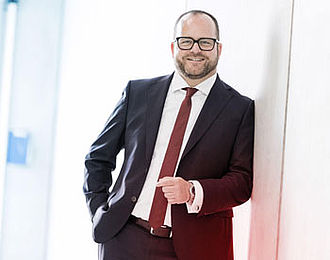
SPECTARIS fosters collaboration in our industry.
“The very informative discussions at SPECTARIS in Berlin and here at our office convinced me of SPECTARIS’s commitment and the quality of its work. In particular, the opportunity to combine topics from analytical, biotechnology, and laboratory technology with the field of medical technology is very interesting for Sigma,” I wrote upon joining in 2011. This has been confirmed, and today we are actively involved in several working groups.
Dr. Michael Sander, Managing Director of Sigma Laborzentrifugen GmbH
National advocacy group puts the spotlight on the industry
Laser Components benefits from the industry association in a variety of ways. As a company, we value the broad exchange of information within the working groups—whether in human resources, marketing, or export control, customs, and foreign trade practices. For our industry, Spectaris also serves as a political voice—the Photonics Trade Association not only maintains constant communication with the BMWi and BMBF ministries but also provides information on European initiatives.
Patrick Paul, Managing Director of LASER COMPONENTS GmbH
A Voice for Innovative Small and Medium-Sized Businesses
In the century of the photon, we need an advocacy group that is both strong and responsive. For us, as providers and consultants for the most innovative products on the global photonics market, this institution is particularly important. We know our interests (e.g., in the area of foreign trade) are in good hands, and we can focus on what matters most: satisfying our customers.
Andreas Börner, Managing Director of Laser 2000 GmbH

Our membership in the SPECTARIS industry association is of great value to us.
It not only gives us access to a strong network of leading companies across various high-tech industries, but also provides an important platform for professional exchange and continuing education. In addition, we benefit from the association’s strong advocacy with policymakers, the business community, and society at large, which plays a crucial role in creating a sustainable framework for the future. Through our membership in SPECTARIS, we can contribute our expertise, address current developments at an early stage, and jointly drive innovation and sustainable growth.
Frank Billhardt, Division Laser Protection EMEA, LASERVISION GmbH


