

A Vision for Improved Home Respiratory Therapy
SPECTARIS calls for greater recognition of assistive device providers in the healthcare delivery process
The following vision statement was developed on behalf of the SPECTARIS “Respiratory Home Therapy” expert group.
 |  |  |  |
 |  |  |  |
 |  |  |  |
 |  |  |  |
 |  |  |  |
What is home respiratory therapy?
This refers to non-hospital-based ventilation as well as the provision of oxygen and sleep apnea therapy devices.
What specific services do home care providers offer in the area of respiratory home therapy?
They play a key role in caring for patients with chronic respiratory diseases by providing all the necessary medical devices and technology. It is these non-physician healthcare providers who bring services related to these medical devices directly to patients’ homes and support their therapy in coordination with all professional groups involved in the patient’s care (such as nurses, respiratory therapists, physical therapists
, speech-language pathologists, etc.).
Services Provided by Home Care Providers
An Overview

Home care providers make an immense contribution to comprehensive, community-based health care and to relieving the burden on inpatient care—for example, by preventing hospitalizations and ensuring a swift and smooth transition out of the inpatient setting.
The number of ventilator beds in intensive care units would have to be more than doubled if outpatient ventilator care were not available.
An overview of our services:
- Testing of the selected therapy device, as well as initiation and adjustment of therapy (while the patient is still hospitalized) as prescribed by a physician
- Coordination with the treating physicians and outpatient nursing staff regarding the course of therapy
- Installation and adjustment of therapy equipment at the patient's permanent residence
- Instruction and training for patients, family members, and nursing staff on the use and care of therapeutic devices, accessories, and supplies
- Regular home visits, including documentation of those visits
- Other required services, such as refilling the oxygen, as well as the regular maintenance and safety inspections of the equipment required by the manufacturer and under the terms of the contract
- Collection of device data and documentation of all data directly necessary for the insured person's care
- Providing a telephone hotline for patient inquiries
- Provision of a technical emergency service (24/7)
- Repairs of medical devices in accordance with the manufacturer's specifications, either on-site or by providing an identical loaner device to ensure the smooth continuation of therapy, performed in a properly equipped workshop
What WILL healthcare ideally look like in the future?
In the future,
- Telemedicine and e-health should be the standard in outpatient care
- Enabling patients to participate more and have a greater say in their care
- Cross-sector collaboration and individualized treatment pathways should be the norm
What political framework conditions must be established to ensure modern, forward-looking healthcare?
1. Give patients a stronger voice!
We support the new federal government’s plans to strengthen the voice of patients in self-governing bodies. Patient organizations should be granted their own full voting rights in the Joint Federal Committee (G-BA)—and thus be directly involved in decisions regarding the provision of assistive devices for home use.
2. Politically recognize assistive technology providers and ensure equal rights!
- Providers of assistive devices must be classified as systemically important and, in the event of a crisis, be granted priority access to protective measures and be reimbursed for the additional costs incurred due to the pandemic
- Equal consideration in legislative proposals or health emergencies
- Granting the right to have a say and to actively participate in the self-governing bodies of the health care system (in particular the G-BA)
3. Consistently advance the digitization of at-home respiratory therapy
- Despite the technical capabilities, no nationwide model has been implemented to date. It is therefore necessary to translate the existing legal provisions into manageable standards
- Create new reimbursement models for the use of digital or telemonitoring-enabled tools and services (such as video consultations, teleconsultations, and telemonitoring)
- Early Connection to the Telematics Infrastructure
- Updating the list of assistive devices and expanding it to include devices with digital components
4. Incorporate the provision of assistive devices in the home into SGB V
Services provided by assistive device providers in the home setting should be enshrined in SGB V as home care services that complement the provision of assistive devices—with the goal of ensuring that patients and insured individuals have a guaranteed entitlement to the provision of assistive devices and related services, which cannot be separated.
5. Create incentives for innovative healthcare alliances and models
- Encourage statutory health insurance plans, through incentives, to jointly develop and implement innovative care models
- Statutory health insurance plans should actively utilize innovative offerings in the field of assistive device provision and communicate these to their insured members (Section 68b, Paragraph 2, SGB V)
6. Take External Factors into Account in Assistive Device Contracts
In order to be able to respond more flexibly in the future to unforeseeable external factors (such as price increases, shortages of raw materials and supplies
, etc.), the contracts—which typically span several years—between health insurance funds and medical device providers should be adapted more flexibly to changes in conditions that arise on short notice. The introduction of a medical aid cost index is recommended as an objective and transparent basis for assessment.
Based on the considerations mentioned above, the target vision is as follows:
»For us, patients and the success of their therapy are at the heart of our services. As a home care provider of respiratory home therapy, our mission is to work in collaboration with patient
organizations, prescribers, nursing staff (where applicable), and payers to ensure needs-based care for chronically ill patients—care that is focused on therapeutic success and cost-effectiveness throughout the
entire duration of therapy. In doing so, the potential of digitalization in respiratory
home therapy should be fully leveraged. We are also committed to ensuring that patients are proactively involved in
decisions regarding their therapy, thereby further increasing their adherence to treatment. “
Interview
Doctors Answer Questions


1. How do you view the role and importance of home care providers in the care of patients with chronic conditions in the field of respiratory home therapy—both now and in the future?
Dr. Alfred Wiater: “Alongside physicians and nurses, home care providers represent the third pillar in the care of patients who require respiratory home therapy. The services that home care providers must deliver to ensure adequate patient care have not yet been sufficiently defined. This requires a standardized catalog of services and a defined certification of qualifications for home care providers.”
Dr. Jens Geiseler: “Home care providers play an important role in the care of patients with chronic illnesses. Without the provision of oxygen, ventilators, and supplies, as well as a 24-hour emergency service, care would not function. However, I believe that training patients on how to use the equipment and adjust the settings is more the responsibility of the physician or the hospital.”
2. To what extent do you believe that e-health, telemedicine, and telemonitoring can contribute to improving care for patients with chronic conditions in the area of respiratory home therapy?
Dr. Alfred Wiater: “Taking advantage of the opportunities offered by digitalization—including in the field of home respiratory therapy—enables us to improve the quality of care. However, digital medicine, even when using AI, cannot and must not replace personal contact with patients. This applies to medical and nursing care as well as to care provided by home care providers. In addition to establishing digital care structures, it is essential to ensure that the implementation of digital care complies with data protection regulations. Patients must be fully informed about the possible uses of their data before giving their consent to data sharing. Obtaining consent from people whose cognitive functions are impaired—for example, due to age—can be problematic. Appropriate safeguards must be established for these individuals. Furthermore, older people in particular may feel overwhelmed by the technology underlying digitalization. Finally, accessing their stored data can cause stress and anxiety for patients if they misinterpret or misunderstand the information. Precautions must also be taken for these cases.”
Dr. Jens Geiseler: “Telemedicine and telemonitoring can effectively support the care of patients with chronic conditions and help improve that care. However, this requires that patients be willing to share their treatment data—with hospitals as well as all other relevant stakeholders. In my view, however, the data should be stored at the hospital or in specialized telemedicine centers, rather than with the provider, even if this is more expensive. Storing the data there eliminates the question of jurisdiction and responsibility for the stored data.”
3. Given rapidly rising costs and a growing shortage of skilled workers, how can the quality of care in home respiratory therapy be ensured in the future? How can service providers be supported in this regard?
Dr. Alfred Wiater: “The appeal of the role of home care providers can be enhanced through a clearly defined job description and performance-based compensation. The goal is to make the transition from being a mere equipment supplier to a qualified home care consultant. Improving the quality of care—especially by leveraging the opportunities offered by digitalization—will only be possible if there are coordinated measures in place, such as case conferences for individual patients that involve the attending physicians, nurses, and home care consultants.”
Dr. Jens Geiseler: “Home care providers will continue to be important and reliable partners in the future, provided they ensure reliable, high-quality, and patient-centered care. In doing so, they make a significant contribution to patients’ well-being and to a model of care that focuses on therapeutic success. I am generally open to the policy demands formulated by SPECTARIS in its vision statement. These should, in principle, be suitable for achieving the outlined vision.”
What Patients Say
The Importance of Home Respiratory Therapy for Your Personal Well-Being


Contact Person


Read the vision statement here:
Press Release:
What Our Members Say
SPECTARIS acts as a strong association that vigorously represents the interests of its members in the political, business, and social spheres.
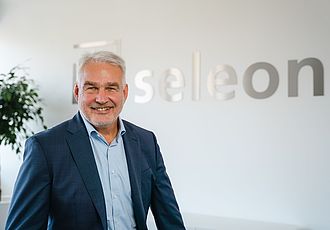
“SPECTARIS acts as a strong association that vigorously represents its members’ interests in the political, business, and social spheres. As members, we have the opportunity to actively raise our concerns and help shape the agenda to ensure that our voice is heard in relevant political and social discussions. In addition, through SPECTARIS, we have access to a broad network of companies, experts, and decision-makers from the high-tech industry. This allows us to forge valuable contacts and leverage synergies. Through this exchange, we and other members can benefit from each other’s experiences and expertise.”
Frank-Martin Rammelt, Managing Director of seleon GmbH
Together, we are strong.
Together we are strong—That is why we value the strong network and the open and excellent collaboration within the association, which allows us, as one of the leading manufacturers, to work together on solutions to the modern challenges in the contact lens industry, to collaborate on joint campaigns, and to capitalize on identified trends.
Johannes Zupfer, General Manager for Germany, Austria, and Switzerland, CooperVision GmbH

Advancing Photonics
Photonics is one of the most innovative key industries and places high demands on the organizations that represent its interests. SPECTARIS meets these demands in a compelling manner. As a strong industry association, SPECTARIS effectively represents the interests of its members in the political, business, and social spheres, while also promoting exchange and networking within the industry. We thank SPECTARIS for this commitment and greatly value our trusting collaboration.
Dr. Ralf Kuschnereit, JENOPTIK AG

OBE relies on high-quality products “Made in Germany.”
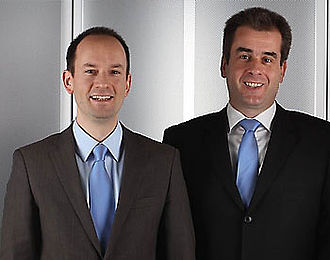
OBE relies on high-quality products “Made in Germany.” Thanks to innovation and automation, spring hinges and security screws can be manufactured in large quantities at the Ispringen facility. This goes hand in hand with increased productivity and a division of labor for simple products at our facility in China. In this way, we secure jobs in Germany.
Peter Specht / Erik Schäfer - Managing Directors, OBE
Community makes us strong!
For us as medium-sized companies, the SPECTARIS association serves as a bridge between the government and our interests—our collective strength makes us stronger! We appreciate the very helpful continuing education program in the field of medical technology and benefit from the organization of a wide variety of delegation trips. Our membership in SPECTARIS also ensures that we receive regular updates on new regulatory requirements.
Maik Greiser, Managing Partner / CEO, ATMOS MedizinTechnik GmbH & Co. KG

The association offers services that are perfectly tailored to our needs.
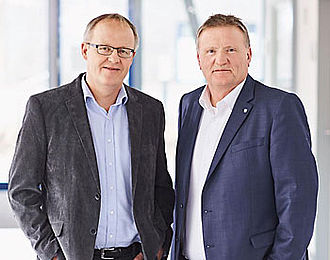
Our industry association, SPECTARIS, is a strong advocate for the interests of medium-sized, owner-managed companies like ours. It is just as important to us that the association provides a platform for open dialogue among member companies and offers services—such as industry reports and events focused on specific topics—that are perfectly tailored to our needs.
Managing Partners of Jüke Systemtechnik GmbH, Martin Hovestadt (left) and Heinrich Jürgens (right)
A Voice for Medical Technology
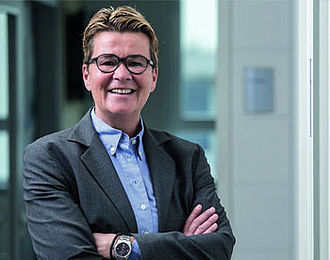
For us as a medical technology manufacturer, SPECTARIS serves as an important voice in our dealings with policymakers. Especially in light of the current MDR, it is immensely important to have a strong and effective association to represent our interests. We are very satisfied with our collaboration and feel well represented.
Regina Kirchner-Gottschalk, Managing Director of KaWe – KIRCHNER & WILHELM GmbH + Co. KG
Innovation drives us forward
Demands are growing, markets are changing—but innovation opens up new paths for us. With digital progress, bold ideas, and modern processes, we are shaping the standards of tomorrow. As a SPECTARIS member, we leverage the strength of the network to actively shape the future in this dynamic environment.
Fabian Bohnen, COO / Stephan Börner, CEO, Ofa Bamberg GmbH

What we particularly appreciate about SPECTARIS is its technical expertise.
As a medium-sized medical technology company, Richard Wolf benefits greatly from SPECTARIS’s extensive network. We particularly value their technical expertise.
Management of Richard Wolf GmbH: Mr. Pfab, Mr. Steinbeck
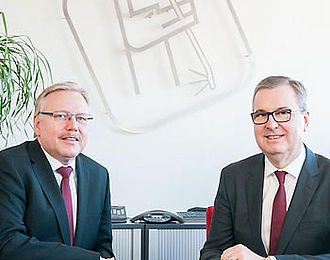
It's worth getting involved!
In times of rapid and far-reaching changes in the medtech industry and a challenging regulatory environment, SPECTARIS is an important partner for our company and plays an indispensable role as an advocate for our interests in Berlin and Brussels. It’s worth getting involved!
Bert Sutter, Managing Director, Sutter Medizintechnik GmbH
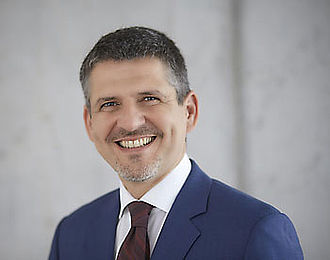
We want to be a trusted partner for our laboratory customers, both today and in the future.
SPECTARIS’s in-depth information on industry and technology trends, as well as the regulatory landscape, is just as important to us as its advocacy work in Berlin and Brussels. The dedicated SPECTARIS team is always a great point of contact for us.
Dr. Christoph Schöler, Managing Partner, BRAND GMBH + CO KG, VACUUBRAND GMBH + CO KG

A voice for the industry
In a diverse and specialized industry such as analytical technology—which is highly technical and subject to numerous regulatory requirements—small specialists compete with large technology conglomerates. SPECTARIS succeeds in uniting the interests of all its members and serves as the industry’s collective voice and advocate.
Albrecht Sieper, Managing Director of Elementar Analysensysteme GmbH
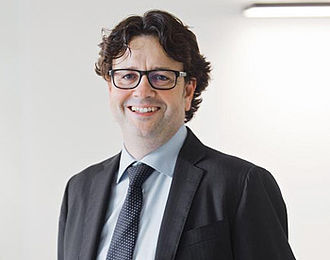
SPECTARIS is the ideal platform.
SPECTARIS provides us with the ideal platform for constructive dialogue with member companies and serves as a reliable voice for the laboratory industry in the realms of politics and science.
Dr. Gunther Wobser, Managing Partner of LAUDA DR. R. WOBSER GMBH & CO. KG
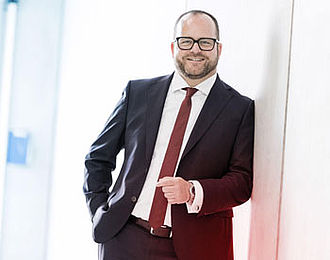
SPECTARIS fosters collaboration in our industry.
“The very informative discussions at SPECTARIS in Berlin and here at our office convinced me of SPECTARIS’s commitment and the quality of its work. In particular, the opportunity to combine topics from analytical, biotechnology, and laboratory technology with the field of medical technology is very interesting for Sigma,” I wrote upon joining in 2011. This has been confirmed, and today we are actively involved in several working groups.
Dr. Michael Sander, Managing Director of Sigma Laborzentrifugen GmbH
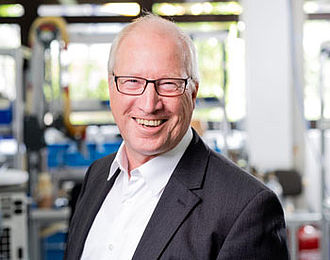
National advocacy group puts the spotlight on the industry
Laser Components benefits from the industry association in a variety of ways. As a company, we value the broad exchange of information within the working groups—whether in human resources, marketing, or export control, customs, and foreign trade practices. For our industry, Spectaris also serves as a political voice—the Photonics Trade Association not only maintains constant communication with the BMWi and BMBF ministries but also provides information on European initiatives.
Patrick Paul, Managing Director of LASER COMPONENTS GmbH
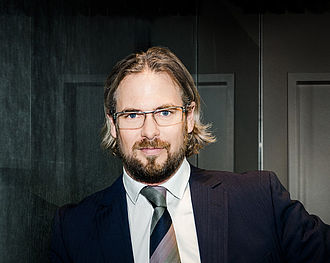
A Voice for Innovative Small and Medium-Sized Businesses
In the century of the photon, we need an advocacy group that is both strong and responsive. For us, as providers and consultants for the most innovative products on the global photonics market, this institution is particularly important. We know our interests (e.g., in the area of foreign trade) are in good hands, and we can focus on what matters most: satisfying our customers.
Andreas Börner, Managing Director of Laser 2000 GmbH

Our membership in the SPECTARIS industry association is of great value to us.
It not only gives us access to a strong network of leading companies across various high-tech industries, but also provides an important platform for professional exchange and continuing education. In addition, we benefit from the association’s strong advocacy with policymakers, the business community, and society at large, which plays a crucial role in creating a sustainable framework for the future. Through our membership in SPECTARIS, we can contribute our expertise, address current developments at an early stage, and jointly drive innovation and sustainable growth.
Frank Billhardt, Division Laser Protection EMEA, LASERVISION GmbH


