

Guidelines for a New Direction in Economic Policy
SPECTARIS Recommendations for the 2021 Election Year

German manufacturers in the fields of optics, photonics, analytical technology, biotechnology, laboratory technology, and medical technology are among the most important pillars of Germany as a high-tech hub. International market leaders, many “hidden champions,” and a strong core of small and medium-sized enterprises (SMEs) characterize these industries, which we represent as the German industry association SPECTARIS. Most of our association’s members develop and manufacture their products in Germany, thereby demonstrating a strong commitment to the country as a location for value creation and employment. In 2020, these companies generated total revenue of approximately 72 billion euros and employed nearly 330,000 people. These companies are not only key drivers of innovation and economic growth, but also make an important contribution to society, for example in the areas of health and climate protection. Medical, analytical, biotechnology, and laboratory technology are also playing a significant role in combating the COVID-19 pandemic.
Unfortunately, the economic consequences of the COVID-19 crisis are also affecting the industries represented by SPECTARIS. In particular, in the fields of photonics, ophthalmic optics, long-range optics, and photographic technology, sales were significantly below the previous year’s levels, with small and medium-sized enterprises being hit hardest by the decline. It is foreseeable that the COVID-19 crisis will lead to severe disruptions in the global economy, with serious consequences: Even after the crisis, governments will do everything in their power to strengthen their own economies; distortions of competition, protectionism, and trade barriers are to be feared. At the same time, massive changes to value chains and markets are to be expected, and the competitive positions of all companies will be put to the test—including through bankruptcies and a sharp increase in mergers and acquisitions.
Emergency programs for crisis management were and remain necessary. But the crisis also presents an opportunity: Now more than ever, we need policies that focus on creating, maintaining, and promoting the competitive advantages of Germany’s key technologies and their industrial sectors here in Germany. To this end, we should dare to usher in a new era of genuine action in German research, industrial, SME, digital, and foreign trade policies. Germany’s competitive framework must climb back to the top of the international rankings from its current mid-table position. In this way, the high-tech companies of the German industry association SPECTARIS can make a tangible contribution to the post-COVID economic recovery. SPECTARIS therefore calls on policymakers to take the following four guiding principles for economic policy into account during the new legislative terms of the federal and state governments.
Taking Small and Medium-Sized Industrial Businesses Seriously
Tax reform, digitalization, level playing field, STEM initiative

Over many decades, German high-tech companies have fought hard to establish their position in international markets; they are known for their innovative strength, quality, and ability to deliver solutions. However, Germany’s industrial SMEs—many of which are family-owned businesses—all too often face conditions that put them at a disadvantage in international competition. This is demonstrated, among other things, by a business location study published in January 2021 by the Mannheim-based economic research institute ZEW.
Taking Small and Medium-Sized Industrial Enterprises Seriously: Tax Reform, Digitalization, a Level Playing Field, and the STEM Initiative
Over many decades, German high-tech companies have fought hard to establish their position in the international market; they are known for their innovative strength, quality, and ability to provide solutions. However, Germany’s industrial SMEs—many of which are family-owned businesses—too often face conditions that put them at a disadvantage in international competition.
This is demonstrated, among other things, by a business location study published in January 2021 by the Mannheim-based economic research institute ZEW. Among the 21 industrialized nations surveyed, Germany ranks 17th, placing it near the bottom of the list. According to the study, Germany has fallen behind its European and American competitors, particularly in terms of the tax burden on businesses. Economic researchers also consider comprehensive tax reform to be essential. SPECTARIS therefore endorses the BDI’s tax reform proposals. Internationally active high-tech sectors, in particular, require a competitive and effective corporate tax burden of no more than 25 percent, as well as a sustainable tax system that promotes future investments, innovation, and growth in Germany. This includes a structural modernization of corporate taxes and a unified corporate tax system in which trade tax is integrated into income taxes. The proposals to strengthen Germany as a tax location, as outlined in the Federal Ministry for Economic Affairs and Energy’s (BMWi) SME strategy, should also be viewed as a step in the right direction. They recognize the vital economic role played by the many owner-managed, small and medium-sized employers, on whose entrepreneurial spirit our welfare state depends. These proposals must be addressed now and implemented swiftly and in full, as there is no need for yet another set of strategy papers once a new government takes office.
In addition to tax policy, the successful digital transformation of our infrastructure is a key foundation for the international competitiveness of our industries. We must now take action much more quickly, consistently, and comprehensively than before so that, after the COVID-19 crisis, Germany as a business location can continue to drive the digital transformation forward at full speed. In this regard, SPECTARIS endorses the BDI’s proposals on how Germany’s framework conditions and capabilities for the digital transformation can be further expanded.
However, achieving legal certainty regarding international data transfers—whether to the United States or to other third countries—is a matter of particular urgency. The European Court of Justice’s Schrems II ruling imposes requirements on companies that are difficult to implement, requiring them to individually review and secure their data flows to third countries. This necessitates a harmonized interpretation of data protection requirements by the state data protection authorities. However, long-term safeguards for international data exchange can only be achieved through so-called adequacy decisions between the EU, the U.S., and other third countries, which the German federal government must advocate for.
Furthermore, greater support should be provided for pre-competitive standardization projects so that high-tech SMEs, in particular, can better integrate their devices and products into networks and thereby make them accessible to international markets. In the healthcare sector, digitalization offers the opportunity to manage crises more effectively, tangibly improve patient care overall, and thereby position Germany as a leading market for medical technology. The introduction of electronic health records is a key component of this effort. Above all, the medical technology industry needs clarity on market access, access to anonymized patient data for research and development purposes, reimbursement for digital health services, and a functional telematics infrastructure.
All structural and innovation-promoting measures can only achieve their full impact in conjunction with qualified professionals and digital experts. Intensively promoting digital retraining and continuing education for adults is one thing; promoting mathematics, computer science, natural sciences, and technology (STEM subjects) starting in elementary school is another. For years, there has been a consensus across all social groups and political parties regarding this necessity. Not another legislative term should pass without tangibly improving the quality and appeal of STEM subjects in schools. Initiatives such as the National STEM Forum and the Federal Government’s 2019 STEM Action Plan have presented concrete proposals on how to improve curricula, teacher training and continuing education, and public perception. Now is the time to tackle these proposals decisively and with sufficient resources. Beyond such fundamental programs, new technology initiatives—such as the promotion of quantum technologies—must also be accompanied by early training initiatives, starting right at the beginning of the funding programs, so that Germany will have a suitably qualified workforce in these fields in a few years’ time.
With the interministerial agreement reached in February on a national due diligence law—also known as the Supply Chain Act—Germany is seeking a special regulation that would actually put German companies at a disadvantage compared to companies from other EU countries, thereby undermining the level playing field. While compliance with human rights, labor, social, and environmental standards along supply and value chains is important and already a serious commitment for the SPECTARIS industries today, going it alone at the national level—while the EU is simultaneously striving to create an EU-wide due diligence law—is suboptimal and leads to a patchwork of regulations for companies. Furthermore, basing the scope of the planned law solely on the number of employees at companies based in Germany places them at a disadvantage compared to foreign competitors. SPECTARIS therefore advocates for the creation of a common, more practical, and thus implementable EU regulation on the obligations of companies in their immediate supply chain, as already announced and currently being planned by the European Commission. This should be accompanied by government support, such as guidelines for companies in the area of procurement or the inclusion of suppliers who violate human rights in the EU regime for sanctioning human rights violations. This would have greater international impact and offer companies more legal certainty in international trade than a purely German due diligence law containing many undefined legal terms.
Required actions:
▪ An internationally competitive corporate tax burden in Germany of no more than 25 percent
▪ Timely and full implementation of a
corporate tax reform to reduce the tax burden on businesses
▪ Rapid and consistent digitization of infrastructure supervised or operated by the government
▪ Support for pre-competitive standardization projects
▪ Decisive implementation of action programs to promote STEM subjects—particularly with regard to new technological priorities such as quantum technologies
▪ No unilateral national initiatives in the implementation of standards; regulate due diligence obligations in supply chains at the European level
Expand and Accelerate R&D Funding for Key Technologies
Government measures can promote innovation

Germany’s economic recovery from the COVID-19 pandemic depends heavily on the innovative capacity of German industry—and, in particular, of small and medium-sized enterprises. Government measures can foster this innovative capacity and must hold their own in comparison with those of other ambitious industrialized nations. These measures must address both pre-competitive and competitive support for research and development in order to boost both innovative capacity and the pace of innovation required to achieve it.
Expand and Accelerate R&D Funding for Key Technologies
Germany’s economic recovery from the COVID-19 pandemic depends heavily on the innovative capacity of German industry—and, in particular, of small and medium-sized enterprises. Government measures can foster this innovative capacity and must hold their own in comparison with those of other ambitious industrialized nations. These measures must address both pre-competitive and competitive support for research and development in order to boost both innovative capacity and the pace of innovation required to achieve it.
However, when considering the review processes in the German funding landscape, a 12-month wait from the submission of a project outline or application to the start of the project is not uncommon. This drastically slows down the pace of innovation in German companies—especially when compared to other countries. Review processes for industrial and industry-relevant research and development—particularly in key technologies—must be accelerated as a matter of urgency. To achieve this, it is necessary to support funding agencies with adequate resources, combined with leaner and more efficient processes enabled by digital solutions. At the same time, delays in approving project launches due to insufficient funding budgets must be eliminated. Delayed funding for research projects that have received excellent evaluations jeopardizes the innovation potential of SMEs and the transfer of results to the market.
The second key factor, alongside the pace of innovation, is innovative capacity, which is largely determined by the scope and level of funding. Research funding, in combination with the key and future technologies identified by the federal government, is of paramount importance as a first step and an “enabler” for the development of innovative products and services. It forms the basis for improved living conditions and societal prosperity.
If, on the other hand, we compare German government spending on basic research with that of other countries, it becomes clear that, while Germany’s spending—at 1% of gross domestic product—is above the EU average (0.6%), it is far from occupying a leading position in this area that would be commensurate with Germany’s leading role in Europe. That position, however, is held by countries such as Denmark (1.5% of GDP), Sweden (also 1.5%), and Switzerland (1.3%). When considering government spending on applied research and experimental development in the field of economic affairs, Germany, at 0.3% of GDP (2019), falls below the EU average (0.4%) and lags significantly behind countries such as France (0.8% of GDP) or Italy (0.5% of GDP).
In principle, we welcome the newly introduced tax-based research incentive, as it is open to all topics, independent of partners, and can be used for ongoing projects without a prior application phase. However, the current funding rate of 25% does not sufficiently support the development of innovations, since small and medium-sized enterprises often do not maintain their own research departments and rely on contract research. The funding rate should therefore be raised from 25% to 40% to facilitate both in-house R&D activities and the outsourcing of work to institutes or other third parties. An alternative increase in the contribution assessment ceiling from the current 4 million to, for example, 8 million euros per year would benefit only large companies, but not small and medium-sized enterprises.
The development of cutting-edge pacemaker technologies, in particular, is being hindered by severely limited program budgets and project scopes in the Industrial Collaborative Research (IGF) program—which is especially important for small and medium-sized enterprises (SMEs)—and the Central Innovation Program for SMEs (ZIM). The current annual budget for IGF projects, amounting to approximately 200 million euros, is sufficient for a maximum of 600 project launches per year and falls short of the goal of minimizing the technological risks associated with innovative ideas across the entire spectrum of German industry. For this reason, numerous highly rated projects are not being carried out, even though project-accompanying committees—each comprising up to 20 predominantly SME companies—ensure the practical relevance of the research and the effectiveness of technology transfer. The innovation potential of SMEs is not even remotely being tapped here. A significant expansion of the budget to 360 million euros per year and annual increases of 3% are necessary. This increase will also significantly expand the training and continuing education of skilled workers in cutting-edge technologies supported by the IGF program.
Limiting the project budgets for ZIM projects to a maximum of 450 T Euro or 550 T Euro, and capping funding rates for domestic projects at 25–55%, is far from sufficient to promote key technologies and the development of innovative products based on them. In reality, after deducting material costs, the funding does not even cover a single full-time position. The permitted ZIM project budgets should therefore be raised to 750 T Euro, and the total ZIM budget to at least 800 Mio. Euro per year.
To fully realize the potential of key technologies across a wide range of applications, support for flagship technologies must ultimately be expanded to include broad-based funding for cross-cutting technology fields. This can be illustrated by the interplay between quantum and photonics: Quantum technology represents a high-potential flagship that paves the way for applications in many of the societal challenge areas defined in the High-Tech Strategy 2025 (Action Area 1), such as “security” and “mobility.” Photonics, on the other hand, as a much broader field, is a cross-cutting technology that is now an integral part of nearly every cutting-edge technological development. It serves as an interface between the quantum world and the macroscopic world. To realize the full potential of quantum technology, it is necessary to develop a roadmap for the use of quantum technology leading to the commercialization of applications on an industrial scale, as well as to identify and adequately address the underlying photonic technologies that require funding.
Required actions:
▪ Facilitating and accelerating access to public funding
▪ Significant increase in funding budgets, funding volumes, and funding rates, particularly for the IGF, ZIM, and tax-based research funding programs
▪ Creating stronger incentives for innovation activities by reintroducing the “lighthouse technology” concept funding toward complementary broad-based funding
▪ Development of a roadmap for quantum technology funding and adequate consideration of photonics as an “enabling technology”
Cut red tape now!
Bureaucracy wastes companies' time and costs them money

Applications, reporting requirements, statistics, documentation, and certificates—German bureaucracy robs businesses of time and costs money: Both are urgently needed during and after the crisis for the economy to recover. The goal must be to provide ongoing relief rather than imposing an ever-increasing burden of rules that are of secondary importance to society, the economy, and the environment. The statutory “bureaucracy brake” must ensure that the administrative costs incurred by each new federal law are offset elsewhere to the same extent (“one in, one out” rule).
Cut red tape now!
Applications, reporting requirements, statistics, documentation, and certifications—German bureaucracy robs companies of time and costs money: Both are urgently needed during and after the crisis to help the economy recover. The goal must be to continuously reduce the burden rather than impose more and more rules that are of secondary importance to society, the economy, and the environment. The statutory “bureaucracy brake” must ensure that the administrative costs incurred by each new federal law are offset elsewhere to the same extent (“one in, one out” rule). This rule must also apply to the implementation of EU law, which has not yet been covered by the bureaucracy brake. Furthermore, during the difficult post-COVID-19 recovery phase, there should be no additional regulation whatsoever, both in the EU and in Germany.
In this context, SPECTARIS welcomes the European Commission’s efforts—as part of the Regulatory Fitness and Performance Program (REFIT)—to make EU law simpler and more cost-effective, particularly for SMEs, as a step in the right direction.
Market participants should not find themselves subject to a patchwork of regulations that lead to a decline in investment and distortions of competition. At the national level, no new bureaucratic hurdles should be erected if similar regulatory proposals are already under discussion at the EU level or if other ministries within the federal government are planning similar legislative proposals at the national level. A good example of this is the unilateral national approach to the Due Diligence Act described in the first chapter, even though work on an EU-wide regulation is proceeding just as intensively at the EU level.
At the European level, the definition of small and medium-sized enterprises (SMEs) should be expanded, as the current limit of 249 employees no longer reflects the reality of those industrial SMEs in particular that operate labor-intensive manufacturing in Germany. A wide variety of reporting requirements and subsidy programs are tied to this definition, which either overwhelms German SMEs or excludes them from receiving subsidies. SPECTARIS agrees with the BDI that the SME threshold should be raised to at least 499 employees. In addition, qualitative criteria—such as those related to ownership, management, and control—should also be included in the future to ensure that the unique character of German SMEs is taken into account.
Another important step is the widespread implementation of e-government. We must push forward more decisively than before to digitize and streamline administrative processes, consolidate existing data, and provide easy access. Before the crisis, Germany ranked only 21st out of 28 in the EU’s Digital Public Services ranking. Online applications that ultimately can only be submitted after being printed out and signed by hand are just one striking example of many inefficiencies. In the area of research funding, it has already been explained how lengthy review processes can hinder the industry’s innovative capacity.
In the healthcare sector in particular, general bureaucracy is compounded by numerous additional regulatory requirements, which place an above-average burden on companies. In the recently introduced Medical Device Regulation (MDR), many requirements are of questionable value in relation to patient benefit, delay the introduction of innovations, and force small and medium-sized manufacturers and their critical-care products out of the market. Companies operating internationally will expand to other locations around the world. In the medical technology sector, therefore, the goals of competitiveness, security of supply, and innovative strength must become additional benchmarks for the implementation of future regulations.
Required actions:
▪ Reducing bureaucracy: No additional regulations in the immediate post-COVID period; thereafter, a strict “one in, one out” principle, including in the relationship between European and national law
▪ Rapid implementation and consistent expansion of the EU’s REFIT program
▪ Better coordination within the federal government’s ministries and at the EU level regarding identical legislative proposals
▪ Higher thresholds for the European Commission’s definition of SMEs
▪ Decisive digitization of administrative processes
▪ Simplify the interpretation of medical device regulations
Removing Barriers to Germany's Foreign Trade
The SPECTARIS industries thrive on international business

The SPECTARIS industries depend on international business: they generate nearly two-thirds of their revenue abroad. There is concern that, following the COVID-19 crisis, many countries will adopt protectionist measures to strengthen their own economies. These trends must be countered with a clear political commitment to support our leading position in global trade and safeguard free trade. To this end, the foreign trade operations of Germany’s high-tech industries require practical, transparent, and legally certain guidelines in the areas of trade compliance, customs, and export controls, as well as targeted export promotion measures.
Removing Barriers to Germany's Foreign Trade
The SPECTARIS industries depend on international business: They generate nearly two-thirds of their revenue abroad. There is concern that, following the COVID-19 crisis, many countries will adopt protectionist measures to strengthen their own economies. For example, despite investment agreements, the People’s Republic of China is pushing ahead with the decoupling of its own economy, making it more difficult to access local procurement projects and thereby protecting its suppliers and customers from international competition. The United States, India, and Russia are also increasingly favoring locally manufactured products in public tenders. These trends must be countered with clear political will in order to support our leading position in global trade and safeguard free trade. To this end, the foreign trade operations of Germany’s high-tech sectors require practical, transparent, and legally sound guidelines in the areas of trade compliance, customs, and export controls, as well as targeted export promotion measures.
Risk management is becoming increasingly important in global trade. This is placing a growing burden on companies. Businesses must be prepared for sudden changes in export regulations, whether these take the form of punitive tariffs, tightened sanctions against key trading partners, “blacklists” as in the case of Huawei, extraterritorial export control regulations imposed by individual countries, or singular events such as Brexit. Foreign policy conducted through punitive tariffs and sanctions must come to an end. Tariff and non-tariff trade barriers must be eliminated. For example, differing registration and labeling requirements, as well as requirements for conformity assessment procedures, lead to significant additional personnel and financial burdens, which then limit resources available for innovative product development. Therefore, sector-specific approaches must be incorporated into free trade negotiations, particularly cooperation with trading partners in the area of regulation. This includes, above all, the mutual recognition of conformity assessment procedures and product standards. It must be possible to maintain globally diversified supply chains for laboratory and medical technology.
Furthermore, it is necessary to take into account the high relevance of medical technology products as well as goods in the fields of analytical, biotechnology, and laboratory technology in any trade policy instruments. For example, exemptions for humanitarian goods must be considered when drafting new sanctions legislation, and these should be coordinated with major partners such as the United States whenever possible. Furthermore, trade restrictions—such as the export bans on certain medical goods we saw during the COVID-19 pandemic—must be avoided at all costs. In addition, trade facilitation measures for these products—such as duty-free access or simplified market access —such as mutual recognition of certifications—should be given greater consideration in bilateral discussions or EU-level talks with partner countries. Furthermore, the benefits of free trade agreements must be explained transparently and made easy for companies to implement without bureaucratic hurdles, so that companies can actually make active use of them.
To counterbalance the protectionist initiatives of individual countries in industrial policy, the WTO’s capacity to act must continue to be vigorously strengthened. The canceled 12th WTO Ministerial Conference should be rescheduled as soon as possible, or held virtually as an alternative. With the return of the United States, a solution must be found immediately to maintain the WTO’s Appellate Body, so that the COVID-19 crisis does not turn into a crisis of protectionism. Since a significant portion of the pharmaceutical and medical technology supply chains involve the United States, China, Switzerland, and India, negotiations with these countries should be intensified. Alongside efforts to strengthen the WTO, the German government should, at a time when multilateralism is frequently losing ground, advocate within the European Union for the conclusion and expansion of bilateral trade agreements. This includes, on the one hand, concluding trade agreements with Australia, New Zealand, and the Mercosur countries. On the other hand, stalled negotiations on free trade agreements with strategically important partners such as the United States, India, or China should be resumed.
German government agencies should expand their export promotion and export financing efforts. Export promotion tools, such as participation in international trade fairs and delegation trips, have proven effective. To strengthen export activity in the wake of the crisis, these measures should not only be continued but also further integrated, expanded, and made more flexible in terms of their terms and conditions. More broadly, it would be desirable to have a central platform for foreign trade promotion instruments. The federal government’s offerings listed on this platform should be grouped by target markets and industries and published centrally through the platform. This would allow companies to see at a glance which instruments can be used for their target markets or industries and in what sequence, enabling them to better align their activities accordingly.
Required measures:
▪ Consistent advocacy for free trade and against protectionism
▪ Customs and export control regulations must be clear and administratively feasible
▪ Mutual recognition of certification procedures and product standards, and the prevention of tariff-based trade barriers
▪ Strengthening the WTO
▪ Expansion of bilateral trade agreements with Mercosur countries, Australia, and New Zealand, as well as the resumption of trade talks with the U.S., China, and India
▪ Expansion of export promotion and export financing
▪ Establishment of a cross-sector platform with industry-specific activities on the topic of “foreign trade promotion instruments”
Your Contact Person
Read the position paper on the 2021 federal election here
Guidelines for a New Direction in Economic Policy
What Our Members Say
SPECTARIS acts as a strong association that vigorously represents the interests of its members in the political, business, and social spheres.
“SPECTARIS acts as a strong association that vigorously represents its members’ interests in the political, business, and social spheres. As members, we have the opportunity to actively raise our concerns and help shape the agenda to ensure that our voice is heard in relevant political and social discussions. In addition, through SPECTARIS, we have access to a broad network of companies, experts, and decision-makers from the high-tech industry. This allows us to forge valuable contacts and leverage synergies. Through this exchange, we and other members can benefit from each other’s experiences and expertise.”
Frank-Martin Rammelt, Managing Director of seleon GmbH

Together, we are strong.
Together we are strong—That is why we value the strong network and the open and excellent collaboration within the association, which allows us, as one of the leading manufacturers, to work together on solutions to the modern challenges in the contact lens industry, to collaborate on joint campaigns, and to capitalize on identified trends.
Johannes Zupfer, General Manager for Germany, Austria, and Switzerland, CooperVision GmbH

Advancing Photonics
Photonics is one of the most innovative key industries and places high demands on the organizations that represent its interests. SPECTARIS meets these demands in a compelling manner. As a strong industry association, SPECTARIS effectively represents the interests of its members in the political, business, and social spheres, while also promoting exchange and networking within the industry. We thank SPECTARIS for this commitment and greatly value our trusting collaboration.
Dr. Ralf Kuschnereit, JENOPTIK AG

OBE relies on high-quality products “Made in Germany.”
OBE relies on high-quality products “Made in Germany.” Thanks to innovation and automation, spring hinges and security screws can be manufactured in large quantities at the Ispringen facility. This goes hand in hand with increased productivity and a division of labor for simple products at our facility in China. In this way, we secure jobs in Germany.
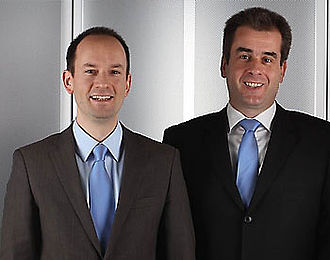
Peter Specht / Erik Schäfer - Managing Directors, OBE
Community makes us strong!
For us as medium-sized companies, the SPECTARIS association serves as a bridge between the government and our interests—our collective strength makes us stronger! We appreciate the very helpful continuing education program in the field of medical technology and benefit from the organization of a wide variety of delegation trips. Our membership in SPECTARIS also ensures that we receive regular updates on new regulatory requirements.
Maik Greiser, Managing Partner / CEO, ATMOS MedizinTechnik GmbH & Co. KG

The association offers services that are perfectly tailored to our needs.
Our industry association, SPECTARIS, is a strong advocate for the interests of medium-sized, owner-managed companies like ours. It is just as important to us that the association provides a platform for open dialogue among member companies and offers services—such as industry reports and events focused on specific topics—that are perfectly tailored to our needs.
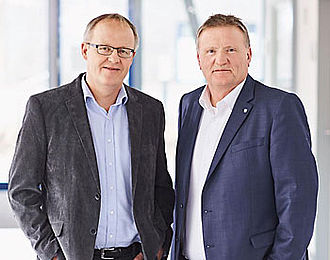
Managing Partners of Jüke Systemtechnik GmbH, Martin Hovestadt (left) and Heinrich Jürgens (right)
A Voice for Medical Technology
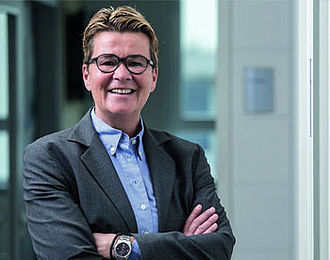
For us as a medical technology manufacturer, SPECTARIS serves as an important voice in our dealings with policymakers. Especially in light of the current MDR, it is immensely important to have a strong and effective association to represent our interests. We are very satisfied with our collaboration and feel well represented.
Regina Kirchner-Gottschalk, Managing Director of KaWe – KIRCHNER & WILHELM GmbH + Co. KG
Innovation drives us forward
Demands are growing, markets are changing—but innovation opens up new paths for us. With digital progress, bold ideas, and modern processes, we are shaping the standards of tomorrow. As a SPECTARIS member, we leverage the strength of the network to actively shape the future in this dynamic environment.
Fabian Bohnen, COO / Stephan Börner, CEO, Ofa Bamberg GmbH

What we particularly appreciate about SPECTARIS is its technical expertise.
As a medium-sized medical technology company, Richard Wolf benefits greatly from SPECTARIS’s extensive network. We particularly value their technical expertise.
Management of Richard Wolf GmbH: Mr. Pfab, Mr. Steinbeck
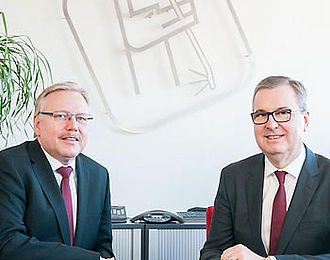
It's worth getting involved!
In times of rapid and far-reaching changes in the medtech industry and a challenging regulatory environment, SPECTARIS is an important partner for our company and plays an indispensable role as an advocate for our interests in Berlin and Brussels. It’s worth getting involved!
Bert Sutter, Managing Director, Sutter Medizintechnik GmbH

We want to be a trusted partner for our laboratory customers, both today and in the future.
SPECTARIS’s in-depth information on industry and technology trends, as well as the regulatory landscape, is just as important to us as its advocacy work in Berlin and Brussels. The dedicated SPECTARIS team is always a great point of contact for us.
Dr. Christoph Schöler, Managing Partner, BRAND GMBH + CO KG, VACUUBRAND GMBH + CO KG

A voice for the industry
In a diverse and specialized industry such as analytical technology—which is highly technical and subject to numerous regulatory requirements—small specialists compete with large technology conglomerates. SPECTARIS succeeds in uniting the interests of all its members and serves as the industry’s collective voice and advocate.
Albrecht Sieper, Managing Director of Elementar Analysensysteme GmbH

SPECTARIS is the ideal platform.
SPECTARIS provides us with the ideal platform for constructive dialogue with member companies and serves as a reliable voice for the laboratory industry in the realms of politics and science.
Dr. Gunther Wobser, Managing Partner of LAUDA DR. R. WOBSER GMBH & CO. KG

SPECTARIS fosters collaboration in our industry.
“The very informative discussions at SPECTARIS in Berlin and here at our office convinced me of SPECTARIS’s commitment and the quality of its work. In particular, the opportunity to combine topics from analytical, biotechnology, and laboratory technology with the field of medical technology is very interesting for Sigma,” I wrote upon joining in 2011. This has been confirmed, and today we are actively involved in several working groups.
Dr. Michael Sander, Managing Director of Sigma Laborzentrifugen GmbH

National advocacy group puts the spotlight on the industry
Laser Components benefits from the industry association in a variety of ways. As a company, we value the broad exchange of information within the working groups—whether in human resources, marketing, or export control, customs, and foreign trade practices. For our industry, Spectaris also serves as a political voice—the Photonics Trade Association not only maintains constant communication with the BMWi and BMBF ministries but also provides information on European initiatives.
Patrick Paul, Managing Director of LASER COMPONENTS GmbH
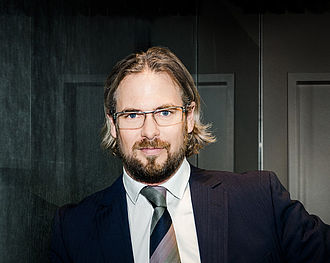
A Voice for Innovative Small and Medium-Sized Businesses
In the century of the photon, we need an advocacy group that is both strong and responsive. For us, as providers and consultants for the most innovative products on the global photonics market, this institution is particularly important. We know our interests (e.g., in the area of foreign trade) are in good hands, and we can focus on what matters most: satisfying our customers.
Andreas Börner, Managing Director of Laser 2000 GmbH

Our membership in the SPECTARIS industry association is of great value to us.
It not only gives us access to a strong network of leading companies across various high-tech industries, but also provides an important platform for professional exchange and continuing education. In addition, we benefit from the association’s strong advocacy with policymakers, the business community, and society at large, which plays a crucial role in creating a sustainable framework for the future. Through our membership in SPECTARIS, we can contribute our expertise, address current developments at an early stage, and jointly drive innovation and sustainable growth.
Frank Billhardt, Division Laser Protection EMEA, LASERVISION GmbH


